Home > Alloys > Invar > Invar 36

Nickel Alloy Grade Data Sheet

Invar 36

Invar 36 is an iron-nickel controlled-expansion alloy containing approximately 36% nickel. Its thermal expansion rate is approximately one-tenth that of carbon steel at temperatures up to about 204 °C, making it suitable for components that must maintain stable dimensions during temperature changes. Invar 36 is widely used for aerospace tooling, composite forming molds, cryogenic equipment, optical and laser systems, semiconductor components, metrology instruments, precision measuring devices, electronic components and assemblies matched to low-expansion materials.


Material Overview

Invar 36 material profile

A concise grade introduction for buyers who need to confirm composition, properties, standards, available forms and suitable applications before sending an inquiry.

Engineering profile

Invar 36 is an iron-nickel controlled-expansion alloy containing approximately 36% nickel. Its thermal expansion rate is approximately one-tenth that of carbon steel at temperatures up to about 204 °C, making it suitable for components that must maintain stable dimensions during temperature changes. Invar 36 is widely used for aerospace tooling, composite forming molds, cryogenic equipment, optical and laser systems, semiconductor components, metrology instruments, precision measuring devices, electronic components and assemblies matched to low-expansion materials.


Invar 36

Technical data on this page is for material selection reference. Final acceptance values should be confirmed by the purchase standard, heat treatment condition, product form, size and material test certificate.

Chemical Composition

Invar 36 composition range

The following table shows common limiting composition values for Alloy 625 / UNS N06625. Actual product chemistry is reported by heat on the material test certificate.

Element Symbol Typical Requirement (%) Role in Invar 36
Nickel Ni 35.0-37.0 Produces the characteristic low-expansion behavior of the alloy.
Iron Fe Balance Forms the base matrix and contributes to the alloy’s magnetic behavior.
Manganese Mn 0.60 max Supports melting practice and metallurgical control.
Silicon Si 0.35 max Controlled as a minor deoxidizing element.
Carbon C 0.10 max Controlled to maintain workability and dimensional performance.
Chromium Cr 0.50 max Controlled residual element.
Molybdenum Mo 0.50 max Controlled residual element.
Copper Cu 0.50 max Controlled residual element.
Phosphorus P 0.025 max Controlled impurity for processing and product quality.
Sulfur S 0.025 max Controlled impurity unless a free-machining grade is specified.


Physical Properties

Key physical and thermal data

These values help customers compare density, thermal behavior, magnetic response and conductivity during early material selection.

Property Metric Value Imperial / Notes Condition
Density Approx. 8.11 g/cm3 Approx. 0.293 lb/in3 Room temperature
Melting Point Approx. 1430 °C Approx. 2605 °F Typical value
Curie Temperature Approx. 230 °C Approx. 446 °F Chemistry and condition dependent
Thermal Conductivity Approx. 10 W/m·K Approx. 69 Btu·in/ft2·h·°F Room temperature
Specific Heat Approx. 515 J/kg·°C Approx. 0.123 Btu/lb·°F Room temperature
Electrical Resistivity Approx. 0.82 µΩ·m Approx. 82 µΩ·cm Room temperature
Modulus of Elasticity Approx. 141 GPa Approx. 20.5 x 10³ ksi Annealed, room temperature
Mean CTE, 21 to -100 °C Approx. 1.26 µm/m·°C Approx. 0.70 µin/in·°F Representative manufacturer data
Mean CTE, 21-100 °C Approx. 1.44 µm/m·°C Approx. 0.80 µin/in·°F Representative manufacturer data
Mean CTE, 21-150 °C Approx. 1.98 µm/m·°C Approx. 1.10 µin/in·°F Representative manufacturer data
Mean CTE, 21-200 °C Approx. 2.52 µm/m·°C Approx. 1.40 µin/in·°F Representative manufacturer data
Mean CTE, 21-250 °C Approx. 3.42 µm/m·°C Approx. 1.90 µin/in·°F Representative manufacturer data


Mechanical Properties

Room-temperature mechanical properties

Mechanical properties vary with product form, size, processing route and heat treatment. The table below summarizes commonly referenced nominal values for material selection.

Product Form / Condition Tensile Strength Yield Strength, 0.2% Elongation Hardness
Annealed bar and strip – typical Approx. 448 MPa / 65 ksi Approx. 276 MPa / 40 ksi Approx. 35% Approx. 70 HRB
Cold drawn bar – typical Approx. 621 MPa / 90 ksi Approx. 483 MPa / 70 ksi Approx. 20% Approx. 90 HRB
Cold rolled strip – typical Approx. 717 MPa / 104 ksi Approx. 679 MPa / 98.5 ksi Approx. 5.5% Approx. 98 HRB
Finished precision component By product specification By product specification By specification By specification


For pressure equipment, aerospace parts or project-specific acceptance, use the minimum requirements in the specified ASTM, ASME, AMS, EN or customer drawing rather than nominal values.

Standards & Specifications

Common Invar 36 standards by product form

YSN128 can quote Alloy 625 products according to ASTM, ASME, AMS, EN, DIN, ISO or customer drawing requirements. Certificate scope can be matched to the purchase order.

Scope Common Standard / Requirement Application Buyer Note
Thermostat Component Alloy ASTM B753-07(2024), Alloy T36 Sheet and strip used as components in bonded thermostat metal This active standard is application-specific and does not cover every Invar 36 product form.
Controlled-Expansion Material ASTM F1684-06(2021), withdrawn 2024 Legacy requirements for UNS K93603 wire, rod, bar, strip, sheet and tubing Use only when accepted by the purchaser or retained by a project specification.
European Designation W.Nr. 1.3912 / FeNi36 European identification for 36% nickel controlled-expansion alloy Confirm the required national or customer material specification.
Thermal Expansion Testing ASTM E228-22 Linear thermal expansion testing by push-rod dilatometer Specify the test interval, specimen direction, thermal history and acceptance value.
Tensile Testing ASTM E8/E8M-25 Room-temperature tensile strength, yield strength and elongation testing Results depend on product form, cold work, orientation and heat treatment.
Custom Precision Products Customer drawing or OEM material specification Tooling, optical structures, cryogenic components and machined assemblies Customer requirements should define CTE, stabilization treatment and dimensional tolerances.
Inspection Documents EN 10204 3.1 or agreed mill certificate Chemical analysis, mechanical testing, heat treatment and traceability Confirm certificate and additional testing requirements before ordering.


Available Product Forms

Invar 36 supply range

Review available product forms, size ranges, standards and delivery options for this alloy.

Form Common Size Range Delivery Condition Typical Applications Page Link
Pipe & Tube Precision small-bore to large drawing-based dimensions Seamless, welded, cold drawn, annealed or stress relieved Cryogenic lines, precision supports and dimensionally stable tubular assemblies View Pipe & Tube
Round Bar Diameter 3-300 mm, larger custom forgings available Hot rolled, forged, annealed, peeled, ground or cold drawn Optical mounts, measuring components, shafts and machined parts View Round Bar
Sheet & Plate Thickness 0.5-100 mm, custom widths and lengths Hot rolled, cold rolled, annealed or precision flattened Composite tooling, molds, instrument frames and aerospace structures View Sheet & Plate
Strip & Foil Thickness 0.02-3 mm, slit widths to specification Cold rolled, annealed, bright finished or tension leveled Thermostat components, precision spacers and electronic assemblies View Strip & Foil
Wire Diameter 0.1-12 mm, coil, spool or straight length Cold drawn, annealed, bright finished or stress relieved Precision wire parts, measuring devices and electronic components View Wire
Fasteners Standard-style and custom drawing dimensions Machined or thread rolled, annealed or stress relieved Low-expansion tooling, optical equipment and precision assemblies View Fasteners
Fittings Drawing-based elbows, tees, reducers and special connectors Machined, formed or welded with agreed heat treatment Precision tubular systems and cryogenic assemblies View Fittings
Flanges Custom diameters, thicknesses and drilling patterns Forged or plate-cut, machined and dimensionally stabilized Vacuum systems, optical chambers and instrument interfaces View Flanges
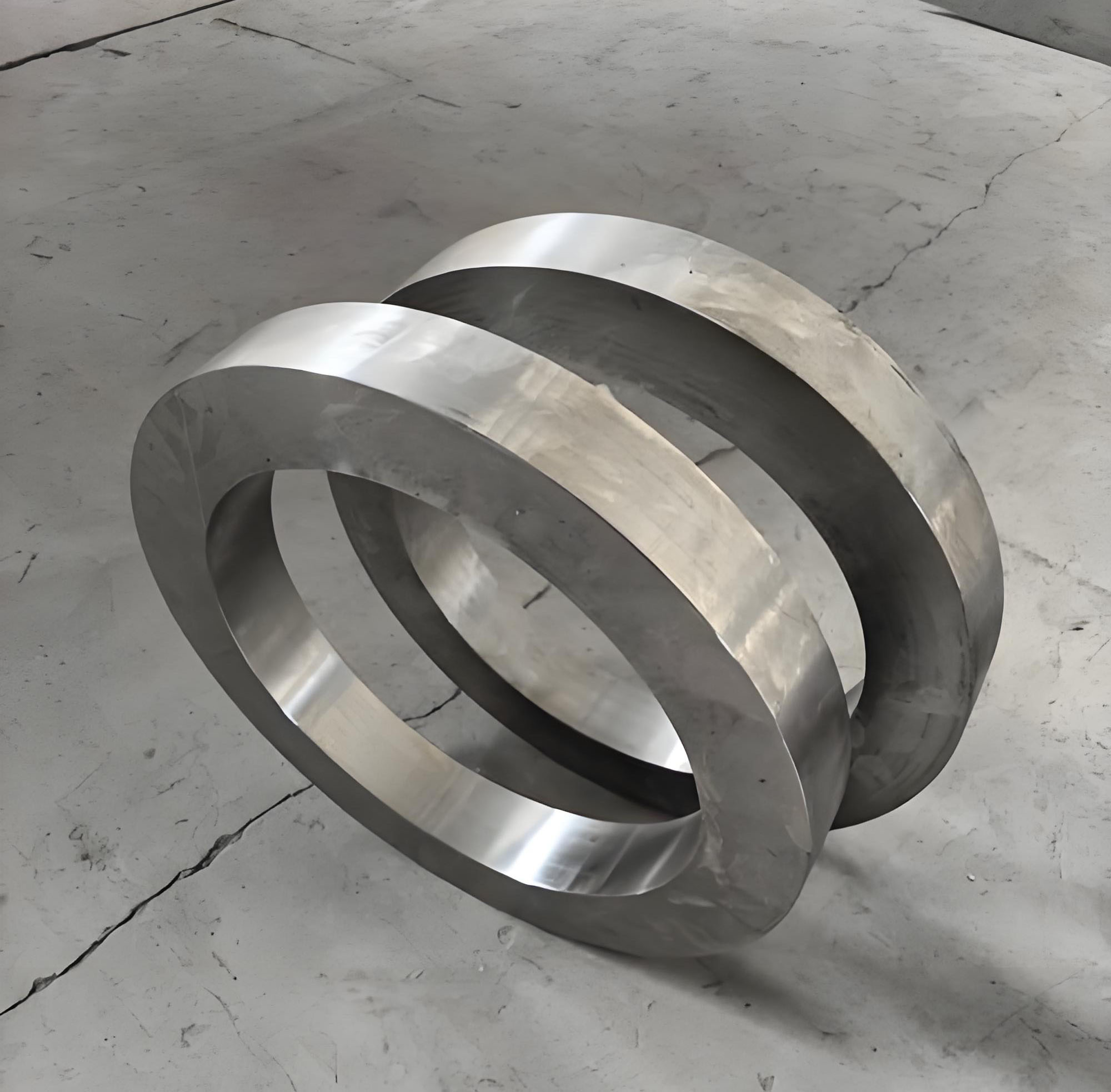
Forgings Rings, discs, blocks, shafts and drawing-based components Forged, annealed, rough machined or finish machined Aerospace tooling, molds, support rings and precision structures View Forgings
Welding Wire Diameter 0.8-4.0 mm or project-specific dimensions Clean bright finish with controlled matching chemistry Qualified joining and repair of Invar 36 assemblies View Welding Wire


Material Selection Guide

When to consider Invar 36

This guide helps buyers connect service conditions with the typical advantage of Alloy 625. Final selection should consider medium concentration, temperature, pressure, fabrication, availability and budget.

Service Requirement Recommended Alloy Reason for Selection Buyer Note
General low expansion from cryogenic to moderate temperatures Invar 36 Provides stable dimensions across a useful temperature range with broad commercial availability. Define the complete operating range and maximum permitted expansion.
Minimum expansion close to room temperature Super Invar 32-5 Can provide lower room-temperature expansion than conventional Invar 36. Its CTE is especially sensitive to chemistry, heat treatment and thermal history.
Composite forming tools and molds Invar 36 Its low expansion helps tooling remain dimensionally compatible with composite structures. Specify plate quality, weld procedure, stress relief and dimensional stabilization.
Glass-to-metal or ceramic hermetic sealing Kovar or another sealing alloy Its expansion curve is designed to match selected glasses and ceramics during sealing. Select the alloy according to the exact glass composition and sealing cycle.
Expansion matching selected electronic glass Invar 42 Its higher nickel content provides a different expansion curve suited to selected glass and electronic applications. Compare expansion over the complete assembly temperature range.
Easy machining of bar components Free-machining Invar grade Controlled additions can improve chip formation and machining productivity. Confirm that the modified chemistry and CTE remain acceptable for the application.


Why Choose Us

Supply and quality support for Invar 36

For ranking traffic, buyers need more than a data sheet. This section gives clear trust signals for procurement, engineering and quality teams.

STASTM / ASME / AMS / EN

Quotation can be matched to project standards and product form specifications.

MTEN10204 3.1 MTC

Heat number, chemistry, mechanical properties and inspection records can be supplied.

QCPMI & Inspection

PMI, UT, dimensional inspection, visual inspection and packing check are available.

CSCustom Size

Cutting, machining allowance, rough machining and drawing-based supply can be arranged.

EPExport Packing

Wooden case, bundle, waterproof protection and international shipping documents.

RFFast Technical Reply

Send grade, size, standard, quantity and destination for a practical quotation route.

FAQ

Invar 36 questions from buyers

Find practical answers about procurement, standards, fabrication and industrial applications.

Invar 36 is used for aerospace and composite tooling, molds and dies, cryogenic equipment, optical and laser systems, metrology instruments, precision measuring devices, semiconductor components, electronic assemblies and parts requiring minimal dimensional change.

Invar 36 may be identified as UNS K93600, K93601 or K93603 depending on the producer and governing specification. The purchase order should state the required chemistry, product form and applicable specification rather than relying only on the trade name.

Invar 36 contains approximately 36% nickel, while Super Invar 32-5 contains approximately 32% nickel and 5.5% cobalt. Super Invar can provide lower expansion close to room temperature, while Invar 36 offers a broader history of use and generally wider product availability.

A representative mean CTE from approximately 21 to 100 °C is about 1.44 µm/m·°C. The value increases over wider or higher temperature intervals and varies with chemistry, cold work, annealing, residual stress and thermal history.

YSN128 can quote plate, sheet, strip, round bar, rod, wire, precision tube, forgings and drawing-based fasteners, fittings and flanges. Custom cutting, machining allowance, heat treatment and dimensional stabilization can be discussed.

ASTM B753-07(2024) includes Alloy T36 for thermostat component applications. ASTM F1684 historically covered UNS K93603 but was withdrawn in 2024. ASTM E228 may be used for thermal expansion testing and ASTM E8/E8M for tensile testing.

Yes. Invar 36 can be welded using qualified GTAW, GMAW or other suitable processes with compatible filler chemistry. Weld shrinkage and residual stress can affect dimensional accuracy, so precision assemblies may require stress relief, thermal stabilization and final dimensional inspection.

Please send the grade or UNS number, product form, dimensions, quantity, operating temperature range, required CTE, delivery condition, heat treatment, dimensional tolerances, inspection requirements and certificate type. Drawings should be supplied for custom or precision-machined components.

Request Invar 36 Quote

Need Invar 36 price, stock or technical support?

Send your required grade, product form, size, quantity, standard, certificate and destination. We will help check availability, production route, inspection scope and practical delivery plan.

Email RFQ

Home Tel Mail Inquiry