Home > Alloys > Hastelloy > Hastelloy C-4

Nickel Alloy Grade Data Sheet

Hastelloy C-4

Hastelloy C-4 is a nickel-chromium-molybdenum alloy developed for excellent thermal stability and resistance to corrosion in severe chemical environments. Its low carbon and silicon contents, together with controlled titanium, reduce the formation of harmful grain-boundary precipitates during welding and prolonged thermal exposure. Alloy C-4 provides useful resistance to hydrochloric acid, sulfuric acid, acetic acid, hot contaminated mineral acids and many chloride-bearing media, making it suitable for chemical reactors, heat exchangers, process piping and welded chemical equipment.


Material Overview

Hastelloy C-4 material profile

A concise grade introduction for buyers who need to confirm composition, properties, standards, available forms and suitable applications before sending an inquiry.

Engineering profile

Hastelloy C-4 is a nickel-chromium-molybdenum alloy developed for excellent thermal stability and resistance to corrosion in severe chemical environments. Its low carbon and silicon contents, together with controlled titanium, reduce the formation of harmful grain-boundary precipitates during welding and prolonged thermal exposure. Alloy C-4 provides useful resistance to hydrochloric acid, sulfuric acid, acetic acid, hot contaminated mineral acids and many chloride-bearing media, making it suitable for chemical reactors, heat exchangers, process piping and welded chemical equipment.


Hastelloy C-4

Technical data on this page is for material selection reference. Final acceptance values should be confirmed by the purchase standard, heat treatment condition, product form, size and material test certificate.

Chemical Composition

Hastelloy C-4 composition range

The following table shows common limiting composition values for Alloy 625 / UNS N06625. Actual product chemistry is reported by heat on the material test certificate.

Element Symbol Typical Requirement Role in Alloy C-4
Nickel Ni Balance Forms the corrosion-resistant alloy base and provides metallurgical stability.
Chromium Cr 14.0-18.0 Improves resistance to oxidizing chemicals and supports passive-film formation.
Molybdenum Mo 14.0-17.0 Provides resistance to reducing acids, pitting and crevice corrosion.
Iron Fe 3.0 max Controlled to preserve the intended nickel-chromium-molybdenum corrosion performance.
Cobalt Co 2.0 max Controlled residual and minor alloying element.
Titanium Ti 0.70 max Supports microstructural stability and reduces susceptibility to grain-boundary attack.
Manganese Mn 1.00 max Controlled minor element and deoxidizer.
Copper Cu 0.50 max Controlled residual element.
Carbon C 0.015 max Restricted to minimize carbide precipitation and preserve weld-zone corrosion resistance.
Silicon Si 0.080 max Restricted to reduce formation of harmful intermetallic phases during thermal exposure.
Phosphorus P 0.040 max Controlled impurity for consistent fabrication and material quality.
Sulfur S 0.030 max Restricted impurity for improved hot workability and welding quality.


Physical Properties

Key physical and thermal data

These values help customers compare density, thermal behavior, magnetic response and conductivity during early material selection.

Property Metric Value Imperial / Notes Condition
Density 8.64 g/cm3 0.312 lb/in3 Room temperature
Melting Range 1335-1380 °C 2435-2515 °F Typical range
Specific Heat Approx. 419 J/kg·°C Approx. 0.100 Btu/lb·°F Approx. 20 °C
Thermal Conductivity Approx. 10.1 W/m·°C Approx. 70 Btu·in/ft2·h·°F Approx. 20 °C
Electrical Resistivity Approx. 125 µΩ·cm Approx. 752 ohm-cmil/ft Approx. 20 °C
Modulus of Elasticity Approx. 205 GPa Approx. 29.7 x 10³ ksi Solution annealed, room temperature
Mean Thermal Expansion Approx. 11.3 µm/m·°C Approx. 6.3 µin/in·°F 20-100 °C
Magnetic Permeability Approx. 1.001 Essentially non-magnetic Solution annealed, room temperature


Mechanical Properties

Room-temperature mechanical properties

Mechanical properties vary with product form, size, processing route and heat treatment. The table below summarizes commonly referenced nominal values for material selection.

Product Form / Condition Tensile Strength Yield Strength, 0.2% Elongation Hardness
Plate, sheet and strip – solution annealed 690 MPa min 280 MPa min 40% min By specification
Rod and bar – solution annealed 690 MPa min 280 MPa min 40% min By specification
Rod and bar – cold worked 825-1100 MPa 550-900 MPa 15-30% Condition dependent
Seamless pipe and tube – solution annealed 690 MPa min 280 MPa min 40% min By specification
Wire – annealed 690-900 MPa 280-500 MPa 30-45% By size and condition
Forgings and rings – solution annealed 690 MPa min 280 MPa min 30% min By specification


For pressure equipment, aerospace parts or project-specific acceptance, use the minimum requirements in the specified ASTM, ASME, AMS, EN or customer drawing rather than nominal values.

Standards & Specifications

Common Hastelloy C-4 standards by product form

YSN128 can quote Alloy 625 products according to ASTM, ASME, AMS, EN, DIN, ISO or customer drawing requirements. Certificate scope can be matched to the purchase order.

Product Form Common Standards Typical Supply Item Certificate / Inspection
Plate, Sheet, Strip ASTM B575 / ASME SB575 Hot rolled plate, cold rolled sheet, strip and cut blanks EN10204 3.1, chemical analysis and mechanical testing
Rod and Bar ASTM B574 / ASME SB574 Round bar, rod, machined bar and cut lengths MTC, PMI, tensile testing and dimensional inspection
Seamless Pipe & Tube ASTM B622 / ASME SB622 Seamless pipe, process tube and heat-exchanger tube Hydrostatic test, eddy-current test and MTC
Welded Pipe ASTM B619 / ASME SB619 Longitudinally welded pipe and fabricated process piping Radiographic or ultrasonic inspection, hydrotest and MTC
Welded Tube ASTM B626 / ASME SB626 Welded process tube and heat-exchanger tube Eddy-current test, hydrostatic or pneumatic test and MTC
Forgings and Flanges ASTM B462 / ASME SB462 Rings, discs, blocks, flanges and custom forgings Heat-treatment record, ultrasonic testing, PMI and MTC
Fittings ASTM B366 / ASME SB366 Elbows, tees, reducers, caps and drawing-based fittings PMI, dimensional inspection, penetrant testing and MTC
Welding Products AWS A5.14 ERNiCrMo-7, AWS A5.11 ENiCrMo-7 Matching welding wire, bare electrodes and covered electrodes Chemical analysis, mill certificate and dimensional inspection


Available Product Forms

Hastelloy C-4 supply range

Review available product forms, size ranges, standards and delivery options for this alloy.

Form Common Size Range Delivery Condition Typical Applications Page Link
Pipe & Tube OD 6-762 mm, wall thickness or schedule to specification Seamless or welded, solution annealed, pickled or bright annealed Acid piping, chemical reactors, heat exchangers and waste-treatment systems View Pipe & Tube
Round Bar Diameter 3-500 mm, custom cut lengths available Hot rolled, forged, solution annealed, peeled or polished Pump shafts, valve parts, fasteners and machined chemical components View Round Bar
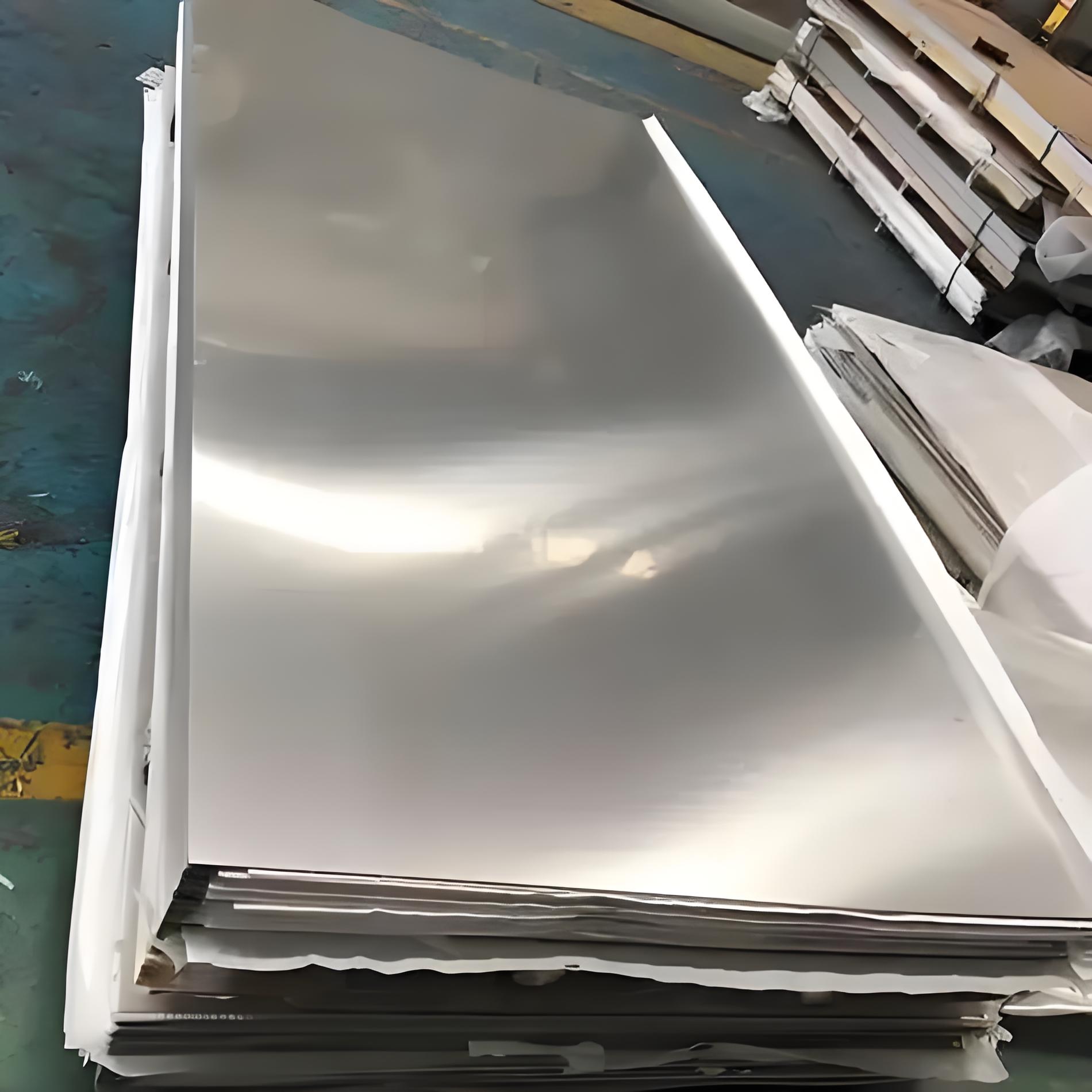
Sheet & Plate Thickness 0.5-150 mm, custom widths and lengths Hot rolled, cold rolled, solution annealed, pickled or polished Process vessels, reactors, tanks, scrubbers and fabricated acid equipment View Sheet & Plate
Strip & Foil Thickness 0.02-5 mm, precision slit widths available Cold rolled, solution annealed, bright finished or coil supplied Corrosion-resistant seals, liners, diaphragms and precision formed parts View Strip & Foil
Wire Diameter 0.1-20 mm, coil, spool or straight-length supply Cold drawn, solution annealed, bright or pickled Wire mesh, demister pads, springs and welding-product manufacture View Wire
Fasteners Standard and custom bolts, nuts, screws, studs and washers Solution annealed, machined, rolled thread or custom finished Chemical plants, acid-processing equipment and pollution-control systems View Fasteners
Fittings ASME, ANSI, EN and custom drawing dimensions Seamless, welded, formed or machined, solution annealed Hydrochloric acid piping, organic acid systems and chemical process lines View Fittings
Flanges ASME B16.5, ASME B16.47, EN and custom large-diameter designs Forged, solution annealed, machined and inspected Severe chemical piping, pressure vessels and acid-processing systems View Flanges
Forgings Rings, discs, blocks and shafts up to 2000 mm or drawing requirements Open-die or closed-die forged, solution annealed and machined Pump components, valve bodies, pressure parts and custom chemical equipment View Forgings
Welding Wire Diameter 0.8-4.0 mm, spool, coil or straight length Precision drawn, clean bright finish and controlled chemistry Joining Alloy C-4, chemical equipment fabrication and corrosion-resistant overlay View Welding Wire


Material Selection Guide

When to consider Hastelloy C-4

This guide helps buyers connect service conditions with the typical advantage of Alloy 625. Final selection should consider medium concentration, temperature, pressure, fabrication, availability and budget.

Service Requirement Why Alloy C-4 Helps Common Product Form Buyer Note
Hydrochloric acid service High nickel and molybdenum contents provide resistance to many hydrochloric acid conditions. Plate, pipe, tube, fittings and process vessels Specify concentration, temperature, aeration and oxidizing contaminants.
Sulfuric and acetic acid environments The nickel-chromium-molybdenum composition provides resistance to many reducing and mixed-acid streams. Pipe, tube, plate, fittings and heat exchangers Provide complete acid chemistry, temperature and process-cycle information.
Welded chemical equipment Low carbon and silicon contents provide strong resistance to weld-zone sensitization and intergranular attack. Plate, sheet, pipe, tube and welding wire Use matching filler metal and control cleanliness and interpass temperature.
Intermediate thermal exposure Alloy C-4 has excellent microstructural stability and resists harmful grain-boundary precipitation. Plate, bar, tube, forgings and fabricated assemblies Specify the complete thermal cycle, operating temperature and exposure duration.
Chloride-bearing chemical streams Molybdenum improves resistance to pitting, crevice corrosion and localized attack. Pipe, tube, sheet, plate, fittings and fasteners Check chloride concentration, temperature, deposits and crevice geometry.
Variable chemical process conditions The alloy provides useful resistance across many reducing and moderately oxidizing environments. Plate, pipe, tube, fittings and fabricated vessels Review start-up, shutdown and cleaning chemicals as well as normal operating conditions.


Why Choose Us

Supply and quality support for Hastelloy C-4

For ranking traffic, buyers need more than a data sheet. This section gives clear trust signals for procurement, engineering and quality teams.

STASTM / ASME / AMS / EN

Quotation can be matched to project standards and product form specifications.

MTEN10204 3.1 MTC

Heat number, chemistry, mechanical properties and inspection records can be supplied.

QCPMI & Inspection

PMI, UT, dimensional inspection, visual inspection and packing check are available.

CSCustom Size

Cutting, machining allowance, rough machining and drawing-based supply can be arranged.

EPExport Packing

Wooden case, bundle, waterproof protection and international shipping documents.

RFFast Technical Reply

Send grade, size, standard, quantity and destination for a practical quotation route.

FAQ

Hastelloy C-4 questions from buyers

Find practical answers about procurement, standards, fabrication and industrial applications.

Hastelloy C-4 is used for chemical reactors, heat exchangers, acid-processing equipment, process piping, pharmaceutical systems, waste treatment and welded components exposed to severe corrosive media.

Yes. UNS N06455 is the standardized UNS designation for Hastelloy C-4. The alloy may also be identified as Alloy C-4, Nickel Alloy C-4, W.Nr. 2.4610 or NiMo16Cr17Ti.

One of its main advantages is excellent thermal stability. Its low carbon and silicon contents help prevent harmful grain-boundary precipitation, allowing welded components to retain useful corrosion resistance without routine post-weld solution treatment.

YSN128 can quote plate, sheet, strip, round bar, rod, wire, seamless pipe, welded pipe, tube, forgings, flanges, fittings, fasteners and welding wire. Cutting, forming, machining and drawing-based production can also be discussed.

Common specifications include ASTM B575 for plate and sheet, ASTM B574 for rod and bar, ASTM B622 for seamless pipe and tube, ASTM B619 for welded pipe, ASTM B626 for welded tube, ASTM B462 for forgings and ASTM B366 for fittings.

Yes. Alloy C-4 has good weldability and strong resistance to heat-affected-zone sensitization. Matching filler metals such as ERNiCrMo-7 may be used with a qualified procedure, clean joint surfaces and controlled interpass temperature.

Alloy C-4 provides excellent resistance to many hydrochloric acid concentrations and temperatures. Actual performance depends on aeration, oxidizing contaminants, concentration and temperature, so the complete chemical environment should be reviewed.

Please send the product form, dimensions, quantity, applicable ASTM or ASME standard, delivery condition, inspection requirements, destination and service temperature. Process chemistry and thermal-cycle information should also be provided when material suitability must be reviewed.

Request Hastelloy C-4 Quote

Need Hastelloy C-4 price, stock or technical support?

Send your required grade, product form, size, quantity, standard, certificate and destination. We will help check availability, production route, inspection scope and practical delivery plan.

Email RFQ

Home Tel Mail Inquiry