Home > Alloys > Kovar > Alloy 46

Nickel Alloy Grade Data Sheet

Alloy 46

Alloy 46 is a controlled-expansion nickel-iron alloy containing approximately 46% nickel and balance iron. Its low and relatively stable coefficient of thermal expansion makes it suitable for sealing to selected soft glasses, ceramics and artificial sapphire. The alloy is normally used in the annealed condition because residual cold work can change the expansion curve and reduce seal reliability. Typical applications include electronic headers, glass-to-metal seals, ceramic feedthroughs, electrical resistors, sensors, lamps, precision instruments and hermetic packages.


Material Overview

Alloy 46 material profile

A concise grade introduction for buyers who need to confirm composition, properties, standards, available forms and suitable applications before sending an inquiry.

Engineering profile

Alloy 46 is a controlled-expansion nickel-iron alloy containing approximately 46% nickel and balance iron. Its low and relatively stable coefficient of thermal expansion makes it suitable for sealing to selected soft glasses, ceramics and artificial sapphire. The alloy is normally used in the annealed condition because residual cold work can change the expansion curve and reduce seal reliability. Typical applications include electronic headers, glass-to-metal seals, ceramic feedthroughs, electrical resistors, sensors, lamps, precision instruments and hermetic packages.


Alloy 46

Technical data on this page is for material selection reference. Final acceptance values should be confirmed by the purchase standard, heat treatment condition, product form, size and material test certificate.

Chemical Composition

Alloy 46 composition range

The following table shows common limiting composition values for Alloy 625 / UNS N06625. Actual product chemistry is reported by heat on the material test certificate.

Element Symbol Typical Requirement, wt.% Role in Alloy 46
Nickel Ni 46.0 nominal Controls the thermal expansion and magnetic transition behavior.
Iron Fe Balance Forms the iron-nickel matrix and provides the required sealing response.
Chromium Cr 0.25 max Restricted residual element for expansion and sealing control.
Manganese Mn 0.80 max Controlled deoxidizing and processing element.
Silicon Si 0.30 max Controlled deoxidizing and residual element.
Aluminum Al 0.10 max Controlled residual element.
Carbon C 0.05 max Restricted to maintain ductility, cleanliness and seal quality.
Phosphorus P 0.025 max Restricted impurity.
Sulfur S 0.025 max Restricted impurity for forming and sealing quality.


Physical Properties

Key physical and thermal data

These values help customers compare density, thermal behavior, magnetic response and conductivity during early material selection.

Property Metric Value Imperial / Additional Value Condition / Notes
Density 8.17-8.20 g/cm3 Approximately 0.295 lb/in3 Room temperature
Melting Temperature Approximately 1427-1430 °C Approximately 2600 °F Typical value
Curie / Inflection Temperature Approximately 460 °C Approximately 860 °F Magnetic expansion transition
Mean Coefficient of Thermal Expansion 7.5 µm/m·°C 20-200 °C Annealed condition
Mean Coefficient of Thermal Expansion 7.1 µm/m·°C 20-300 °C Annealed condition
Mean Coefficient of Thermal Expansion 7.1-7.8 µm/m·°C 20-350 °C Method and heat history dependent
Mean Coefficient of Thermal Expansion 7.5 µm/m·°C 20-400 °C Annealed condition
Mean Coefficient of Thermal Expansion 8.2-8.9 µm/m·°C 20-500 °C Expansion rises near and above the inflection region
Mean Coefficient of Thermal Expansion 9.8-10.7 µm/m·°C 20-600 / 20-700 °C Temperature dependent
Thermal Conductivity Approximately 11 W/m·°C Approximately 79.2 Btu·in/ft2·h·°F Representative room-temperature value
Electrical Resistivity Approximately 47 µΩ·cm Approximately 277 ohm-cmil/ft Approximately 20 °C
Specific Heat Approximately 510 J/kg·°C Approximately 0.12 Btu/lb·°F Representative value


Mechanical Properties

Room-temperature mechanical properties

Mechanical properties vary with product form, size, processing route and heat treatment. The table below summarizes commonly referenced nominal values for material selection.

Product / Condition Tensile Strength Yield Strength, 0.2% Elongation Condition / Notes
Soft annealed wire Approximately 510-552 MPa Approximately 242-280 MPa Approximately 30-40% Typical annealed values
Soft annealed strip Approximately 510-552 MPa Approximately 242-280 MPa Approximately 30-40% Thickness and grain-size dependent
Soft annealed sheet Approximately 510-552 MPa Approximately 242-280 MPa Approximately 30-40% Typical glass-sealing material condition
Annealed hardness Approximately 73-80 HRB Typical soft condition
Cold-worked strip or wire Approximately 590-820 MPa or higher Condition dependent Lower than annealed condition Cold work can change the coefficient of thermal expansion
Finished sealing component Must be evaluated after forming and final annealing Seal integrity and expansion matching take priority over generic tensile strength
Values are typical rather than guaranteed. Final mechanical and thermal-expansion properties depend on composition, thickness, grain size, cold work and final annealing.


For pressure equipment, aerospace parts or project-specific acceptance, use the minimum requirements in the specified ASTM, ASME, AMS, EN or customer drawing rather than nominal values.

Standards & Specifications

Common Alloy 46 standards by product form

YSN128 can quote Alloy 625 products according to ASTM, ASME, AMS, EN, DIN, ISO or customer drawing requirements. Certificate scope can be matched to the purchase order.

Product Form / Requirement Common Standard Scope Buyer Note
Glass-Sealing Alloy ASTM F30 Iron-nickel sealing alloys intended primarily for glass-to-metal sealing in electronic applications Confirm chemistry, surface finish, temper, grain size and thermal-expansion requirements.
Nickel-Iron Strip and Sheet DIN 17745 Controlled-expansion nickel-iron alloy for glass and ceramic sealing Specify the required expansion curve and annealed condition.
European Material Reference SEW 385 Reference for controlled-expansion iron-nickel sealing alloys Verify product form and current customer specification.
International Designation W.Nr. 1.3920 / UNS K94600 Material identification for Alloy 46 and Ni 46 products Designation alone does not define finish, grain size or seal acceptance.
Military / Aerospace Sealing Reference MIL-I-23011 Class 4 Nickel-iron controlled-expansion sealing material reference Confirm contract applicability and revision before procurement.
Wire and Fine Wire ASTM F30 or customer specification Wire for glass headers, feedthroughs and electronic sealing Specify diameter, surface condition, annealing and packaging.
Final Annealing Approximately 850 ±20 °C in hydrogen for 1 hour Typical stress-relief and expansion-restoration treatment Cooling rate, atmosphere and cleanliness must be qualified for the glass system.
Glass-to-Metal Seal Customer seal qualification Compatibility with soft glass, artificial sapphire or selected ceramics Confirm glass composition, wetting, oxidation state and leak-rate criteria.
Pipe, Tube and Fittings No ordinary general-purpose specification listed Custom precision tubing or machined sealing components Use drawing-based supply with agreed expansion and surface requirements.


Available Product Forms

Alloy 46 supply range

Review available product forms, size ranges, standards and delivery options for this alloy.

Form Common Size Range Delivery Condition Typical Applications Page Link
Pipe & Tube Thin-wall seamless or welded tubing and custom feedthrough sizes Annealed, cleaned and prepared for sealing Electronic housings, sensors and hermetic feedthroughs View Pipe & Tube
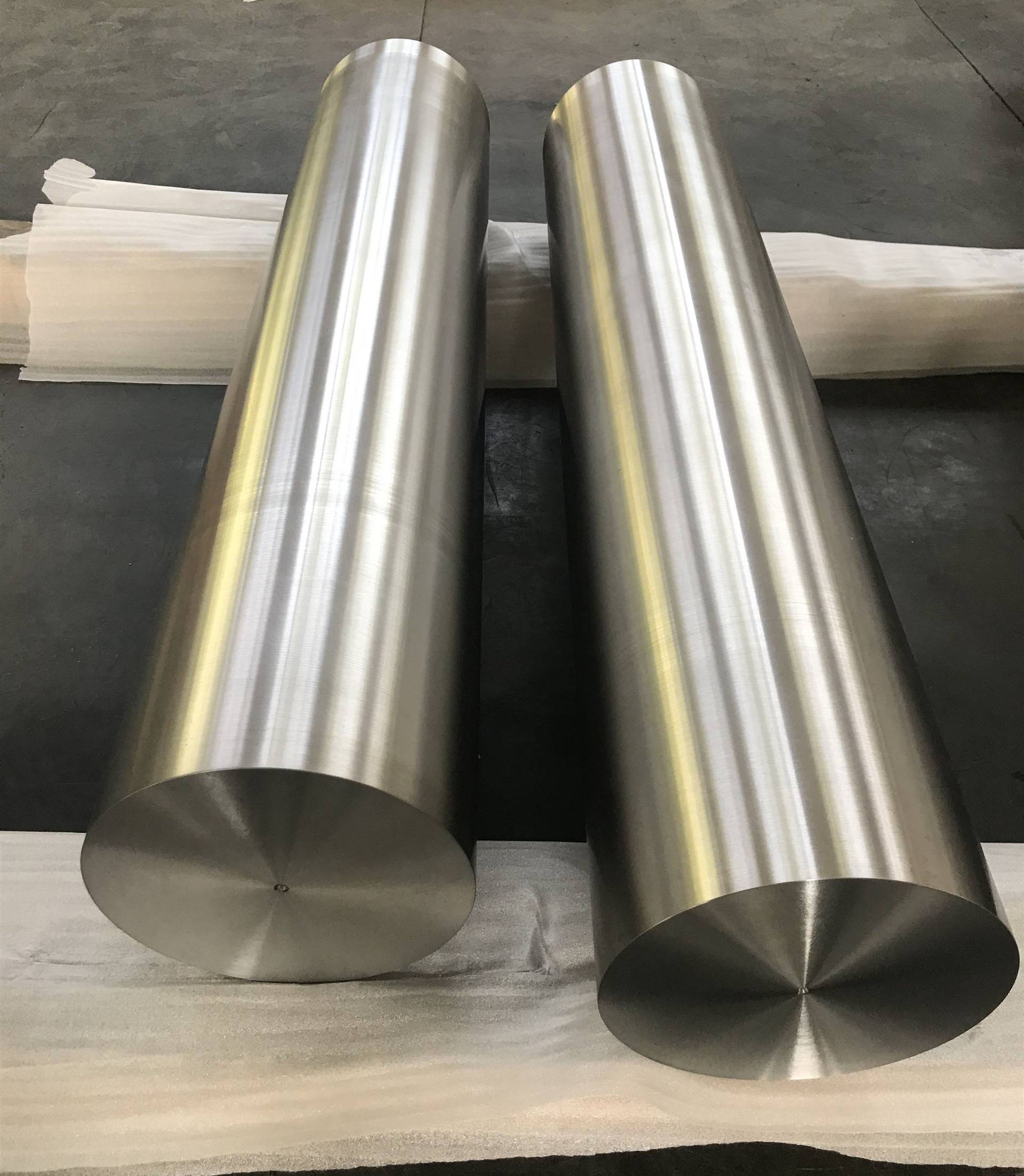
Round Bar Small precision bar and custom machining stock Soft annealed or lightly cold worked as specified Header pins, seal parts and precision electronic components View Round Bar
Sheet & Plate Thin sheet through custom plate and blank dimensions Soft annealed, bright finished or cleaned for sealing Hermetic lids, electronic packages and seal housings View Sheet & Plate
Strip & Foil Precision strip and foil in custom slit widths Annealed, cold rolled or selectively tempered Lead frames, diaphragms, seals and electrical resistors View Strip & Foil
Wire Fine wire through header-pin diameters Soft annealed, bright, cleaned or precision drawn Glass-to-metal seals, lamps, sensors and reed switches View Wire
Fasteners Small pins, screws, studs and custom electronic hardware Annealed or lightly cold worked to drawing Hermetic packages, instruments and precision assemblies View Fasteners
Fittings Custom feedthrough fittings and electronic connectors Machined, cleaned and annealed for sealing Pressure housings, sensors and instrumentation packages View Fittings
Flanges Small precision rings and custom sealing flanges Machined, annealed and prepared for joining Hermetic housings and electrical feedthroughs View Flanges
Forgings Small custom forged blanks and rings Annealed and machined to drawing Special seal housings and precision components View Forgings
Welding Wire Fine joining wire and custom diameters Annealed, clean and suitable for qualified joining Repair, header fabrication and dissimilar-metal joining View Welding Wire


Material Selection Guide

When to consider Alloy 46

This guide helps buyers connect service conditions with the typical advantage of Alloy 625. Final selection should consider medium concentration, temperature, pressure, fabrication, availability and budget.

Alloy / Material Selection Strength Typical Position Selection Note
Alloy 46 Low and stable expansion around 7-8 x 10⁻⁶/°C through selected sealing ranges Glass, ceramic and artificial-sapphire seals Select when the glass expansion curve matches the approximately 46% nickel alloy.
Alloy 42 Lower controlled expansion than Alloy 46 Glass and ceramic seals, lead frames and electronic packages Choose Alloy 42 when the glass requires a lower expansion match.
Alloy 48 Intermediate-to-higher expansion for a different glass match Soft-glass and ceramic sealing systems Compare the complete expansion curve and inflection temperature before selection.
Alloy 52 Higher expansion and approximately 10.3 x 10⁻⁶/°C average expansion Soft-glass seals, electronic tubes and hermetic headers Choose Alloy 52 when the glass system requires the higher 52% nickel expansion profile.
Kovar Controlled expansion matched to selected borosilicate glass and ceramics Electronic packages and ceramic feedthroughs Compare cobalt content, magnetic behavior, glass chemistry and seal temperature.
Invar 36 Much lower expansion and excellent dimensional stability Precision structures, tooling and optical components Not generally a direct replacement for Alloy 46 in soft-glass sealing.


Why Choose Us

Supply and quality support for Alloy 46

For ranking traffic, buyers need more than a data sheet. This section gives clear trust signals for procurement, engineering and quality teams.

STASTM / ASME / AMS / EN

Quotation can be matched to project standards and product form specifications.

MTEN10204 3.1 MTC

Heat number, chemistry, mechanical properties and inspection records can be supplied.

QCPMI & Inspection

PMI, UT, dimensional inspection, visual inspection and packing check are available.

CSCustom Size

Cutting, machining allowance, rough machining and drawing-based supply can be arranged.

EPExport Packing

Wooden case, bundle, waterproof protection and international shipping documents.

RFFast Technical Reply

Send grade, size, standard, quantity and destination for a practical quotation route.

FAQ

Alloy 46 questions from buyers

Find practical answers about procurement, standards, fabrication and industrial applications.

Alloy 46 is mainly used for glass-to-metal and selected ceramic-to-metal seals, electronic headers, feedthroughs, lamps, sensors, electrical resistors, precision instruments and hermetic packages requiring controlled thermal expansion.

Yes. UNS K94600 is the common UNS designation for Alloy 46, also known as NILO 46, Pernifer 46, Ni 46 and Glass Seal 46. W.Nr. 1.3920, DIN 17745 and SEW 385 are additional material references.

Alloy 46 typically has a mean expansion of approximately 7.1-7.8 µm/m·°C through selected ranges from room temperature to 400 °C, increasing to approximately 8.2-8.9 µm/m·°C through 500 °C. The actual curve must be matched to the glass or ceramic formulation.

Cold work can alter the coefficient of thermal expansion and magnetic transition behavior. Alloy 46 is therefore normally supplied and used in a soft annealed condition, with final annealing after forming when the seal design requires a controlled expansion curve.

ASTM F30 is the primary U.S. specification for iron-nickel sealing alloys. DIN 17745, SEW 385, MIL-I-23011 Class 4, UNS K94600 and W.Nr. 1.3920 are commonly used additional references. The current product specification should be confirmed before purchase.

Alloy 46 can be joined by qualified welding, brazing or glass-sealing processes. The joining cycle must control residual stress, oxidation, contamination and cold work. For hermetic products, the glass composition, wetting, atmosphere and leak-rate qualification are critical.

We can quote wire, strip, foil, sheet, thin-wall tube, small bar and precision blanks for sealing applications. Fittings, flanges, fasteners and larger custom parts can be discussed as drawing-based products with specified expansion, surface finish and final annealing.

Please send the Alloy 46 or UNS K94600 designation, product form, dimensions, quantity, glass or ceramic composition, sealing temperature, required expansion curve, final annealing condition, surface finish, leak-rate target, inspection requirements and destination.

Request Alloy 46 Quote

Need Alloy 46 price, stock or technical support?

Send your required grade, product form, size, quantity, standard, certificate and destination. We will help check availability, production route, inspection scope and practical delivery plan.

Email RFQ

Home Tel Mail Inquiry