Home > Alloys > Haynes > HAYNES 188

Nickel Alloy Grade Data Sheet

HAYNES 188

HAYNES 188 is a cobalt-nickel-chromium-tungsten solid-solution-strengthened alloy combining excellent high-temperature strength, oxidation resistance, hot-corrosion resistance and room-temperature fabricability. It is particularly effective for long-term load-bearing service above approximately 650 °C and can provide oxidation resistance during continuous exposure in air or combustion gases up to about 1095 °C. Typical applications include gas-turbine combustion cans, transition ducts, flame holders, afterburner components, exhaust systems, industrial furnace parts, high-temperature sheet fabrications and aerospace engine hardware.


Material Overview

HAYNES 188 material profile

A concise grade introduction for buyers who need to confirm composition, properties, standards, available forms and suitable applications before sending an inquiry.

Engineering profile

HAYNES 188 is a cobalt-nickel-chromium-tungsten solid-solution-strengthened alloy combining excellent high-temperature strength, oxidation resistance, hot-corrosion resistance and room-temperature fabricability. It is particularly effective for long-term load-bearing service above approximately 650 °C and can provide oxidation resistance during continuous exposure in air or combustion gases up to about 1095 °C. Typical applications include gas-turbine combustion cans, transition ducts, flame holders, afterburner components, exhaust systems, industrial furnace parts, high-temperature sheet fabrications and aerospace engine hardware.


HAYNES 188

Technical data on this page is for material selection reference. Final acceptance values should be confirmed by the purchase standard, heat treatment condition, product form, size and material test certificate.

Chemical Composition

HAYNES 188 composition range

The following table shows common limiting composition values for Alloy 625 / UNS N06625. Actual product chemistry is reported by heat on the material test certificate.

Element Symbol Nominal Content (%) Role in HAYNES 188
Cobalt Co Balance, approximately 39 Forms the high-temperature matrix and supports strength and hot-corrosion resistance.
Nickel Ni 22 Improves ductility, phase stability and fabricability.
Chromium Cr 22 Provides oxidation, sulfidation and hot-corrosion resistance.
Tungsten W 14 Provides strong solid-solution strengthening at elevated temperatures.
Iron Fe 3.0 max Controlled residual and processing-related element.
Manganese Mn 1.25 max Supports melting practice and deoxidation control.
Silicon Si 0.35 Supports oxidation behavior and melting practice.
Carbon C 0.10 Contributes carbide strengthening and high-temperature stability.
Lanthanum La 0.03 Improves adherence and stability of the protective oxide scale.
Boron B 0.015 max Controlled minor addition affecting grain-boundary behavior.


Physical Properties

Key physical and thermal data

These values help customers compare density, thermal behavior, magnetic response and conductivity during early material selection.

Property Metric Value Imperial / Notes Condition
Density 8.98 g/cm3 0.324 lb/in3 Room temperature
Melting Range 1315-1410 °C 2400-2570 °F Typical range
Electrical Resistivity Approx. 1.01 µΩ·m Approx. 101 µΩ·cm Room temperature
Specific Heat Approx. 402 J/kg·°C Approx. 0.096 Btu/lb·°F Room temperature
Thermal Conductivity 10.4 W/m·°C 72 Btu·in/ft2·h·°F Room temperature
Dynamic Modulus of Elasticity 232 GPa 33.7 x 10³ ksi Room temperature
Dynamic Modulus of Elasticity 189 GPa Approx. 27.4 x 10³ ksi Approx. 600 °C
Mean CTE, 25-100 °C 12.1 µm/m·°C 6.7 µin/in·°F Representative manufacturer data
Mean CTE, 25-400 °C 13.5 µm/m·°C 7.6 µin/in·°F Representative manufacturer data
Mean CTE, 25-600 °C 14.3 µm/m·°C 8.2 µin/in·°F Representative manufacturer data
Mean CTE, 25-800 °C 15.5 µm/m·°C 8.8 µin/in·°F Representative manufacturer data
Mean CTE, 25-1000 °C 16.5 µm/m·°C Temperature-range dependent Representative manufacturer data


Mechanical Properties

Room-temperature mechanical properties

Mechanical properties vary with product form, size, processing route and heat treatment. The table below summarizes commonly referenced nominal values for material selection.

Product / Test Condition Tensile Strength Yield Strength, 0.2% Elongation Hardness
Hot-rolled plate, solution annealed, room temperature Approx. 991 MPa / 143.8 ksi Approx. 483 MPa / 70.1 ksi Approx. 50.6% Approx. 98 HRB
Cold-rolled sheet, solution annealed, room temperature Approx. 982 MPa / 142.4 ksi Approx. 483 MPa / 70.1 ksi Approx. 50.9% Approx. 98 HRB
Solution-annealed plate, 649 °C Approx. 838 MPa / 121.6 ksi Approx. 311 MPa / 45.1 ksi Approx. 62.8% Temperature dependent
Solution-annealed plate, 760 °C Approx. 580 MPa / 84.1 ksi Approx. 301 MPa / 43.6 ksi Approx. 85.6% Temperature dependent
Solution-annealed plate, 871 °C Approx. 341 MPa / 49.5 ksi Approx. 256 MPa / 37.1 ksi Approx. 97.9% Temperature dependent
Welded transverse sheet, room temperature Approx. 848 MPa / 123 ksi Approx. 483 MPa / 70 ksi Approx. 31% Procedure dependent


For pressure equipment, aerospace parts or project-specific acceptance, use the minimum requirements in the specified ASTM, ASME, AMS, EN or customer drawing rather than nominal values.

Standards & Specifications

Common HAYNES 188 standards by product form

YSN128 can quote Alloy 625 products according to ASTM, ASME, AMS, EN, DIN, ISO or customer drawing requirements. Certificate scope can be matched to the purchase order.

Product Form Common Standard Typical Supply Item Certificate / Inspection
Sheet, Plate and Strip AMS 5608 Solution-treated sheet, plate, strip and cut blanks Material certificate, chemistry, tensile test and heat-treatment record
Billet, Rod and Bar AMS 5772 Billet, round bar, rod and machined bar stock MTC, dimensional inspection and traceability
Forgings AMS 5772 Rings, discs, blocks and drawing-based forgings Heat-treatment record, mechanical testing and optional UT
Bare Welding Rod and Wire AMS 5801 GTAW and GMAW matching-composition filler metal Chemical analysis, tensile test and lot traceability
Aerospace Design Data MMPDS 6.4.2 Design-property reference for aerospace engineering Use the current project-approved MMPDS edition and design allowables.
Pipe, Tube, Fittings and Flanges Customer drawing or project specification Fabricated tube, sleeves, fittings, flanges and special assemblies No generic HAYNES 188 pressure-product standard is listed by the alloy manufacturer.
Inspection Documents EN 10204 3.1 or agreed aerospace certificate Chemical, mechanical, heat-treatment and traceability documentation Confirm additional NDT and source-inspection requirements before ordering.


Available Product Forms

HAYNES 188 supply range

Review available product forms, size ranges, standards and delivery options for this alloy.

Form Common Size Range Delivery Condition Typical Applications Page Link
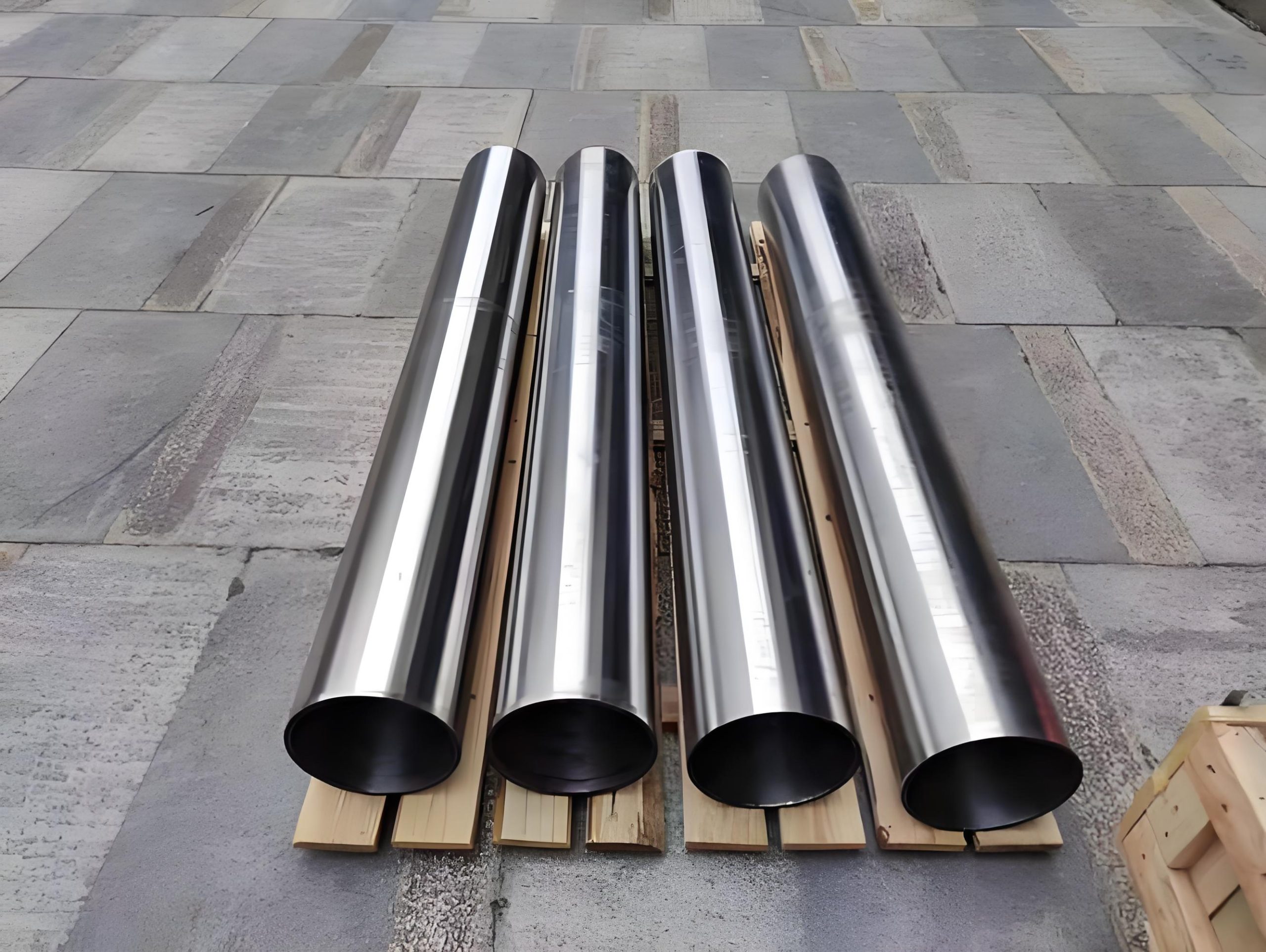
Pipe & Tube Precision small-bore to large drawing-based dimensions Seamless, welded or fabricated, solution treated and rapidly cooled Combustion systems, exhaust assemblies and high-temperature instrument tubes View Pipe & Tube
Round Bar Diameter 3-300 mm, larger custom forgings available Hot worked, forged, solution treated, peeled or ground Engine hardware, fasteners, shafts and machined high-temperature components View Round Bar
Sheet & Plate Thickness 0.5-100 mm, custom widths and lengths Cold rolled or hot rolled, solution treated and rapidly cooled Combustion cans, transition ducts, flame holders and afterburner parts View Sheet & Plate
Strip & Foil Thickness 0.02-3 mm, slit widths to specification Cold rolled, solution treated, bright finished or controlled temper High-temperature seals, bellows, liners and formed aerospace components View Strip & Foil
Wire Diameter 0.1-12 mm, coil, spool or straight length Cold drawn, solution treated or processing-specific condition Wire forms, mesh, springs and high-temperature aerospace components View Wire
Fasteners Standard-style and drawing-based bolts, nuts, screws and studs Machined or thread rolled with project-specified heat treatment Gas turbines, exhaust equipment and high-temperature assemblies View Fasteners
Fittings Drawing-based elbows, tees, reducers and special connectors Formed, machined or welded, solution treated as specified Combustion-gas systems and high-temperature fabricated assemblies View Fittings
Flanges Custom diameters, thicknesses and drilling patterns Forged or plate-cut, solution treated and machined Engine test systems, exhaust assemblies and furnace interfaces View Flanges
Forgings Rings, discs, blocks, shafts and drawing-based components Forged, solution treated, rough machined or finish machined Gas-turbine hardware and highly loaded elevated-temperature components View Forgings
Welding Wire Diameter 0.76-4.7 mm, spool, reel, coil or straight length Clean bright finish with matching controlled chemistry GTAW and GMAW joining of HAYNES 188 components View Welding Wire


Material Selection Guide

When to consider HAYNES 188

This guide helps buyers connect service conditions with the typical advantage of Alloy 625. Final selection should consider medium concentration, temperature, pressure, fabrication, availability and budget.

Service Requirement Recommended Alloy Reason for Selection Buyer Note
Long-term load-bearing service above 650 °C HAYNES 188 Provides strong creep and stress-rupture performance as a solid-solution-strengthened alloy. Design from time-, temperature- and stress-specific creep data.
Gas-turbine combustion hardware HAYNES 188 Combines oxidation resistance, fatigue performance, strength and sheet fabricability. Confirm thermal cycling, combustion chemistry and required design life.
Improved thermal stability and oxidation performance HAYNES 230 Alloy 230 may offer improved phase stability and performance in newer engine designs. Compare creep strength, oxidation data, forming and procurement requirements.
Established cobalt alloy with lower tungsten content HAYNES 25 Alloy 25 remains useful for selected high-temperature and wear-related applications. HAYNES 188 generally provides better oxidation resistance and thermal stability.
Nickel-base fabricated furnace or aerospace component HASTELLOY X Provides established oxidation resistance, weldability and nickel-base fabrication practice. Compare creep strength and hot-corrosion conditions before substitution.
Maximum oxidation resistance with limited structural loading HAYNES 214 Its aluminum-rich protective scale can provide exceptional oxidation resistance. Mechanical loading, thermal cycling and fabrication requirements must also be reviewed.


Why Choose Us

Supply and quality support for HAYNES 188

For ranking traffic, buyers need more than a data sheet. This section gives clear trust signals for procurement, engineering and quality teams.

STASTM / ASME / AMS / EN

Quotation can be matched to project standards and product form specifications.

MTEN10204 3.1 MTC

Heat number, chemistry, mechanical properties and inspection records can be supplied.

QCPMI & Inspection

PMI, UT, dimensional inspection, visual inspection and packing check are available.

CSCustom Size

Cutting, machining allowance, rough machining and drawing-based supply can be arranged.

EPExport Packing

Wooden case, bundle, waterproof protection and international shipping documents.

RFFast Technical Reply

Send grade, size, standard, quantity and destination for a practical quotation route.

FAQ

HAYNES 188 questions from buyers

Find practical answers about procurement, standards, fabrication and industrial applications.

HAYNES 188 is primarily used for gas-turbine combustion cans, transition ducts, flame holders, afterburner components, exhaust systems, high-temperature aerospace hardware and industrial furnace fabrications.

Yes. UNS R30188 is the standardized UNS designation for HAYNES 188, a cobalt-nickel-chromium-tungsten solid-solution-strengthened superalloy.

The alloy is particularly effective for long-term load-bearing applications above approximately 650 °C. It can provide oxidation resistance during continuous exposure in air or combustion gases up to about 1095 °C, but allowable temperature depends on load, atmosphere, section thickness and design life.

Both alloys provide high-temperature strength and oxidation resistance. HAYNES 188 is cobalt based and has an extensive history in gas-turbine combustors, while HAYNES 230 is nickel based and may offer improved thermal stability and oxidation performance in selected newer applications.

YSN128 can quote sheet, plate, strip, round bar, rod, wire, forgings and matching welding wire. Drawing-based tubes, fasteners, fittings and flanges can also be discussed for custom fabricated projects.

AMS 5608 covers sheet, plate and strip; AMS 5772 covers billet, rod, bar and forgings; and AMS 5801 covers matching bare welding rod and wire. MMPDS 6.4.2 provides aerospace design-data references.

Yes. HAYNES 188 can be welded by GTAW, GMAW, electron-beam and resistance-welding processes using matching filler metal. Submerged-arc welding is generally not recommended because its high heat input and slow cooling can promote restraint and cracking.

Please send the UNS or alloy grade, product form, dimensions, quantity, applicable AMS specification, delivery condition, operating temperature, design load, inspection requirements, certificate type and destination. Drawings and welding requirements should be supplied for finished components.

Request HAYNES 188 Quote

Need HAYNES 188 price, stock or technical support?

Send your required grade, product form, size, quantity, standard, certificate and destination. We will help check availability, production route, inspection scope and practical delivery plan.

Email RFQ

Home Tel Mail Inquiry