Home > Alloys > Haynes > HAYNES 282

Nickel Alloy Grade Data Sheet

HAYNES 282

HAYNES 282 is a nickel-chromium-cobalt-molybdenum alloy strengthened by gamma-prime precipitation. It combines high creep strength, thermal stability, oxidation resistance, fabricability and weldability for demanding service at approximately 650-900°C. Typical applications include gas-turbine combustors, turbine and exhaust components, engine cases, rolled rings, combustor liners, exit frames, advanced ultra-supercritical boilers, steam turbines, supercritical CO2 systems and concentrated solar power equipment.


Material Overview

HAYNES 282 material profile

A concise grade introduction for buyers who need to confirm composition, properties, standards, available forms and suitable applications before sending an inquiry.

Engineering profile

HAYNES 282 is a nickel-chromium-cobalt-molybdenum alloy strengthened by gamma-prime precipitation. It combines high creep strength, thermal stability, oxidation resistance, fabricability and weldability for demanding service at approximately 650-900°C. Typical applications include gas-turbine combustors, turbine and exhaust components, engine cases, rolled rings, combustor liners, exit frames, advanced ultra-supercritical boilers, steam turbines, supercritical CO2 systems and concentrated solar power equipment.


HAYNES 282

Technical data on this page is for material selection reference. Final acceptance values should be confirmed by the purchase standard, heat treatment condition, product form, size and material test certificate.

Chemical Composition

HAYNES 282 composition range

The following table shows common limiting composition values for Alloy 625 / UNS N06625. Actual product chemistry is reported by heat on the material test certificate.

Element Symbol Nominal Composition, wt.% Role in HAYNES 282
Nickel Ni Balance Forms the stable austenitic matrix and supports high-temperature corrosion resistance.
Chromium Cr 20.0 Provides oxidation and hot-corrosion resistance.
Cobalt Co 10.0 Improves high-temperature matrix strength and microstructural stability.
Molybdenum Mo 8.5 Provides solid-solution strengthening and improves creep resistance.
Titanium Ti 2.1 Combines with nickel and aluminum to form strengthening gamma-prime precipitates.
Aluminum Al 1.5 Contributes to gamma-prime precipitation and oxidation resistance.
Iron Fe 1.5 max Controlled residual element.
Manganese Mn 0.30 max Controlled minor element used during alloy processing.
Silicon Si 0.15 max Restricted to maintain phase stability and weldability.
Carbon C 0.06 Supports carbide strengthening and grain-boundary stability.
Boron B 0.005 Improves grain-boundary strength and creep performance.


Physical Properties

Key physical and thermal data

These values help customers compare density, thermal behavior, magnetic response and conductivity during early material selection.

Property Metric Value Imperial / Additional Value Condition
Density 8.27 g/cm3 0.299 lb/in3 Solution annealed
Density 8.29 g/cm3 0.300 lb/in3 Age hardened
Melting Range 1300-1375 °C 2370-2510 °F Typical range
Gamma-Prime Solvus 997 °C 1827 °F Approximate
Specific Heat 436 J/kg·°C Approximately 0.104 Btu/lb·°F Room temperature, age hardened
Thermal Conductivity 10.3 W/m·°C Temperature dependent Room temperature, age hardened
Electrical Resistivity 1.261 µΩ·m 126.1 µΩ·cm Room temperature, age hardened
Dynamic Modulus of Elasticity 217 GPa Approximately 31.5 x 10³ ksi Room temperature, age hardened
Mean Coefficient of Thermal Expansion 12.1 µm/m·°C Room temperature to 100 °C Standard two-step aged
Mean Coefficient of Thermal Expansion 12.4 / 12.8 / 13.1 µm/m·°C Room temperature to 200 / 300 / 400 °C Standard two-step aged
Mean Coefficient of Thermal Expansion 13.5 / 13.7 / 14.2 µm/m·°C Room temperature to 500 / 600 / 700 °C Standard two-step aged
Mean Coefficient of Thermal Expansion 14.9 / 15.9 / 16.9 µm/m·°C Room temperature to 800 / 900 / 1000 °C Standard two-step aged


Mechanical Properties

Room-temperature mechanical properties

Mechanical properties vary with product form, size, processing route and heat treatment. The table below summarizes commonly referenced nominal values for material selection.

Product / Test Temperature Yield Strength, 0.2% Tensile Strength Elongation Condition / Notes
Sheet, room temperature 384 MPa 839 MPa 59% Typical solution-annealed forming data; approximately 90 HRB
Plate, room temperature 384 MPa 830 MPa 60% Typical solution-annealed forming data; approximately 93 HRB
Bar, room temperature 348 MPa 816 MPa 62% Typical solution-annealed forming data; approximately 86 HRB
Room temperature 690 MPa 1129 MPa 30.6% Representative standard two-step aged tensile data
538 °C 618 MPa 947 MPa 36.1% Representative standard two-step aged tensile data
649 °C 615 MPa 988 MPa 26.0% Representative standard two-step aged tensile data
760 °C 598 MPa 821 MPa 19.3% Representative standard two-step aged tensile data
871 °C 487 MPa 547 MPa 26.9% Representative standard two-step aged tensile data
Values are typical rather than guaranteed. Actual properties depend on product form, section size, processing history and heat-treatment route.


For pressure equipment, aerospace parts or project-specific acceptance, use the minimum requirements in the specified ASTM, ASME, AMS, EN or customer drawing rather than nominal values.

Standards & Specifications

Common HAYNES 282 standards by product form

YSN128 can quote Alloy 625 products according to ASTM, ASME, AMS, EN, DIN, ISO or customer drawing requirements. Certificate scope can be matched to the purchase order.

Product Form / Requirement Common Standard Scope Buyer Note
Sheet, Plate and Strip AMS 5951 Wrought flat products supplied in the specified solution-treated condition Confirm thickness, condition, testing and applicable revision.
Billet, Rod, Bar and Forgings ASTM B637, AMS 5915 High-temperature wrought products and forging stock Confirm the required product form and heat-treatment condition.
Bare Welding Rod and Wire AWS A5.14 / ASME SFA-5.14 ERNiCrCoMo-2 Matching-composition GTAW and GMAW filler metal Confirm diameter, spool or straight length and welding procedure.
Pressure Construction ASME Code Case 3024 Specified forms for construction up to 1600 °F / 870 °C The required ASME single-step age is 802 °C for 8 hours followed by air cooling.
Process Piping ASME B31 Case 219 Specified piping products up to 1600 °F / 870 °C Verify permitted forms, design allowables and the current Code Case edition.
Aerospace Design Data MMPDS 6.3.11 Published aerospace material design information Use the applicable edition and approved material condition.
Standard Two-Step Aging 1010 °C / 2 h / air cool + 788 °C / 8 h / air cool Common treatment for developing gamma-prime-strengthened properties Typical solution annealing is 1121-1149 °C followed by rapid cooling or water quenching.
Alternative Two-Step Aging 899 °C / 4 h / air cool + 788 °C / 8 h / air cool Alternative qualified aging route for specified applications Do not substitute this treatment where the project or Code Case requires another route.
Code-Case Product Forms ASME Code Case 3024 / ASME B31 Case 219 Plate, sheet, strip, bar, fittings, forgings, forging stock and specified seamless or welded pipe and tube Current editions, permitted dimensions, heat treatment and design allowables must be verified before ordering.


Available Product Forms

HAYNES 282 supply range

Review available product forms, size ranges, standards and delivery options for this alloy.

Form Common Size Range Delivery Condition Typical Applications Page Link
Pipe & Tube Standard and drawing-based seamless or welded sizes Solution annealed; Code Case or project-specified supply High-temperature piping, heat exchangers and turbine systems View Pipe & Tube
Round Bar Diameter up to approximately 229 mm, subject to production route Hot rolled, forged, solution annealed, peeled or machined Engine cases, shafts, rings and high-temperature machined parts View Round Bar
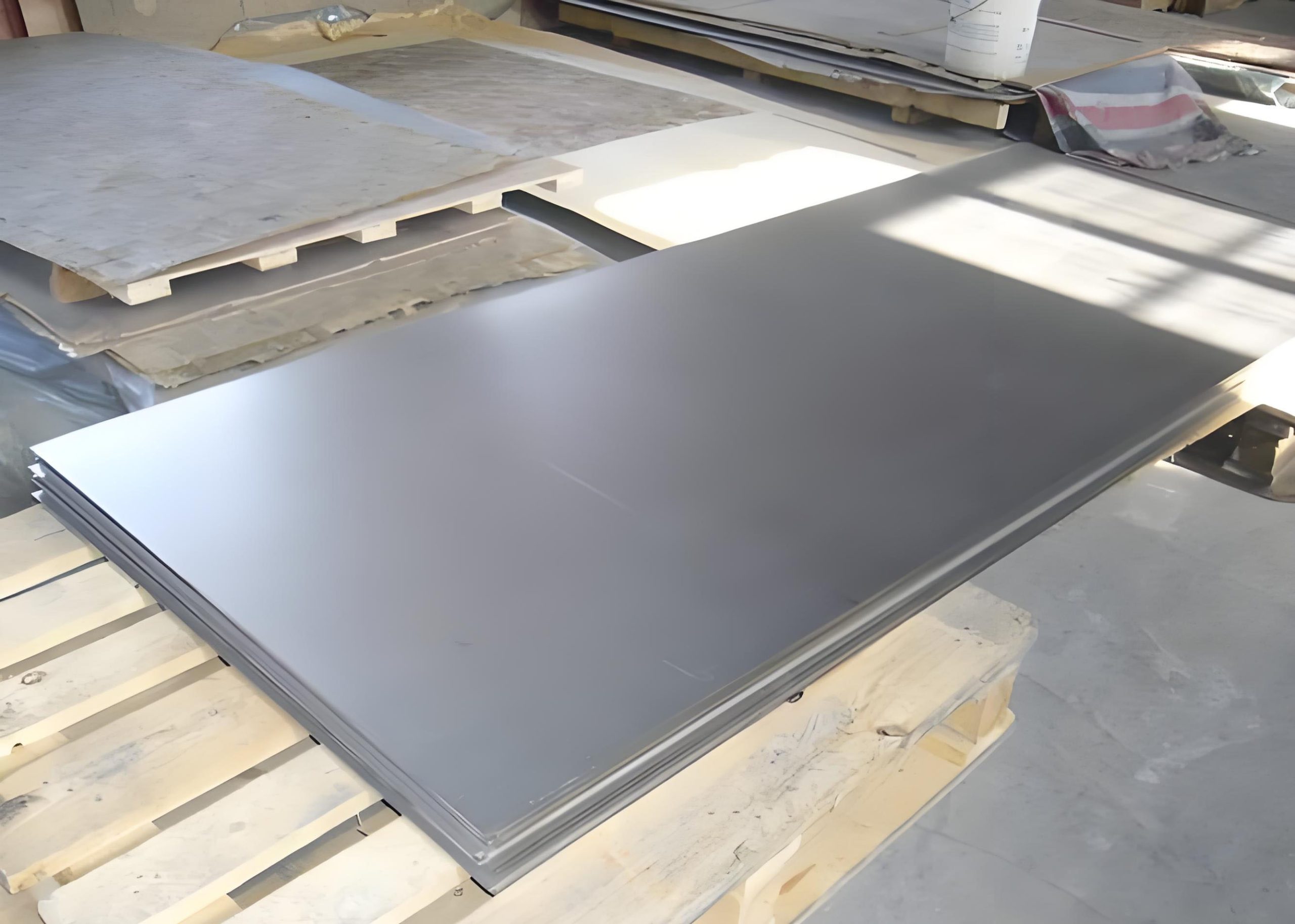
Sheet & Plate Foil and thin sheet through plate over 50 mm thick Solution annealed, pickled, cold rolled or cut to size Combustor liners, exhaust parts, nozzles and hot-section structures View Sheet & Plate
Strip & Foil Precision foil and slit strip in custom widths Cold rolled, solution annealed, bright or cleaned Seals, thermal shields, formed components and combustor hardware View Strip & Foil
Wire Fine wire through heavy wire and rod sizes Cold drawn, solution annealed or supplied for subsequent aging Springs, mesh, fastener stock and precision hot-section parts View Wire
Fasteners Bolts, nuts, screws, studs and drawing-based components Solution treated and aged to the specified procedure Gas turbines, power-generation systems and high-temperature assemblies View Fasteners
Fittings Elbows, tees, reducers and custom drawing dimensions Code Case or project specified, solution treated and aged as required Advanced power piping and supercritical CO2 systems View Fittings
Flanges Drawing-based forged flanges and machined rings Forged, heat treated, machined and inspected to project requirements High-temperature piping, turbine and pressure-system connections View Flanges
Forgings Rolled rings, discs, blocks, shafts and custom forgings Forged, solution annealed and aged to the required route Engine cases, turbine rings, pressure parts and structural components View Forgings
Welding Wire Diameter approximately 0.8-4.7 mm ERNiCrCoMo-2, spool, coil or straight-length supply Matching-alloy GTAW and GMAW fabrication and repair View Welding Wire


Material Selection Guide

When to consider HAYNES 282

This guide helps buyers connect service conditions with the typical advantage of Alloy 625. Final selection should consider medium concentration, temperature, pressure, fabrication, availability and budget.

Alloy Selection Strength Typical Position Selection Note
HAYNES® 282® Balanced creep strength, thermal stability, weldability and fabricability Load-bearing components operating approximately between 650 and 900 °C Select when both high-temperature strength and practical fabrication are important.
HAYNES® 263 Established sheet fabrication and comparatively straightforward processing Combustion and fabricated hot-section components Consider when fabrication history is more important than the higher creep capability of Alloy 282.
Waspaloy High tensile and creep strength in selected temperature ranges Highly stressed turbine and aerospace components Compare weldability, forming requirements and strain-age-cracking risk.
HAYNES® 230® Strong oxidation resistance, thermal stability and fabricability without precipitation aging Furnace, combustion and higher-temperature fabricated equipment Choose for solid-solution service where aged strength is not the primary requirement.
HAYNES® 214® Exceptional oxidation resistance in very-high-temperature environments Low-stress furnace and oxidation-critical components Best suited where environmental resistance takes priority over load-bearing creep strength.
Alloy 617 Broad high-temperature pressure-system experience and ASME coverage Advanced boilers, heat exchangers and high-temperature pressure equipment Compare current code coverage, allowable stress, creep data and operating environment.


Why Choose Us

Supply and quality support for HAYNES 282

For ranking traffic, buyers need more than a data sheet. This section gives clear trust signals for procurement, engineering and quality teams.

STASTM / ASME / AMS / EN

Quotation can be matched to project standards and product form specifications.

MTEN10204 3.1 MTC

Heat number, chemistry, mechanical properties and inspection records can be supplied.

QCPMI & Inspection

PMI, UT, dimensional inspection, visual inspection and packing check are available.

CSCustom Size

Cutting, machining allowance, rough machining and drawing-based supply can be arranged.

EPExport Packing

Wooden case, bundle, waterproof protection and international shipping documents.

RFFast Technical Reply

Send grade, size, standard, quantity and destination for a practical quotation route.

FAQ

HAYNES 282 questions from buyers

Find practical answers about procurement, standards, fabrication and industrial applications.

HAYNES 282 is mainly used for gas-turbine combustors, turbine and exhaust components, nozzles, engine cases, rolled rings, combustor liners, exit frames, advanced ultra-supercritical boilers, steam turbines, supercritical CO2 equipment and concentrated solar power systems.

Yes. UNS N07208 is the standardized UNS designation for HAYNES 282. It is a gamma-prime precipitation-strengthened nickel-chromium-cobalt-molybdenum alloy. No Werkstoff number should be assumed unless it is explicitly required and verified by the purchaser.

The alloy is normally solution annealed at 1121-1149 °C and rapidly cooled or water quenched before aging. The standard two-step treatment is 1010 °C for 2 hours followed by air cooling, then 788 °C for 8 hours followed by air cooling. ASME Code Case 3024 construction requires the specified single-step treatment of 802 °C for 8 hours followed by air cooling.

HAYNES 282 is commonly considered for load-bearing service at approximately 650-900 °C, with ASME Code Case coverage reported up to 870 °C. The allowable design temperature depends on stress, service life, environment, product form, heat treatment and the governing code. Maximum oxidation temperature must not be treated as the allowable design temperature.

We can quote plate, sheet, strip, foil, round bar, rod, wire, welding wire, rolled rings, forgings and drawing-based components. Seamless or welded pipe, tube, fittings, flanges and fasteners can be discussed for Code Case or project-specified requirements.

Common references include AMS 5951 for sheet, plate and strip, ASTM B637 and AMS 5915 for specified billet, bar and forging products, and AWS A5.14 or ASME SFA-5.14 ERNiCrCoMo-2 for welding wire. Pressure applications may reference ASME Code Case 3024 or ASME B31 Case 219, subject to the current edition.

Yes. The alloy is normally welded in the solution-annealed condition before aging. GTAW and GMAW with matching ERNiCrCoMo-2 filler are commonly preferred. Preheating is normally unnecessary above 0 °C, interpass temperature should be kept below 93 °C, and submerged arc welding is not recommended. The completed assembly is normally aged after welding.

Please send the grade or UNS number, product form, dimensions, quantity, applicable specification, solution and aging treatment, required mechanical properties, operating temperature, certificate requirements, inspection plan and destination. Drawings and the governing ASME Code Case should be included for custom pressure components.

Request HAYNES 282 Quote

Need HAYNES 282 price, stock or technical support?

Send your required grade, product form, size, quantity, standard, certificate and destination. We will help check availability, production route, inspection scope and practical delivery plan.

Email RFQ

Home Tel Mail Inquiry