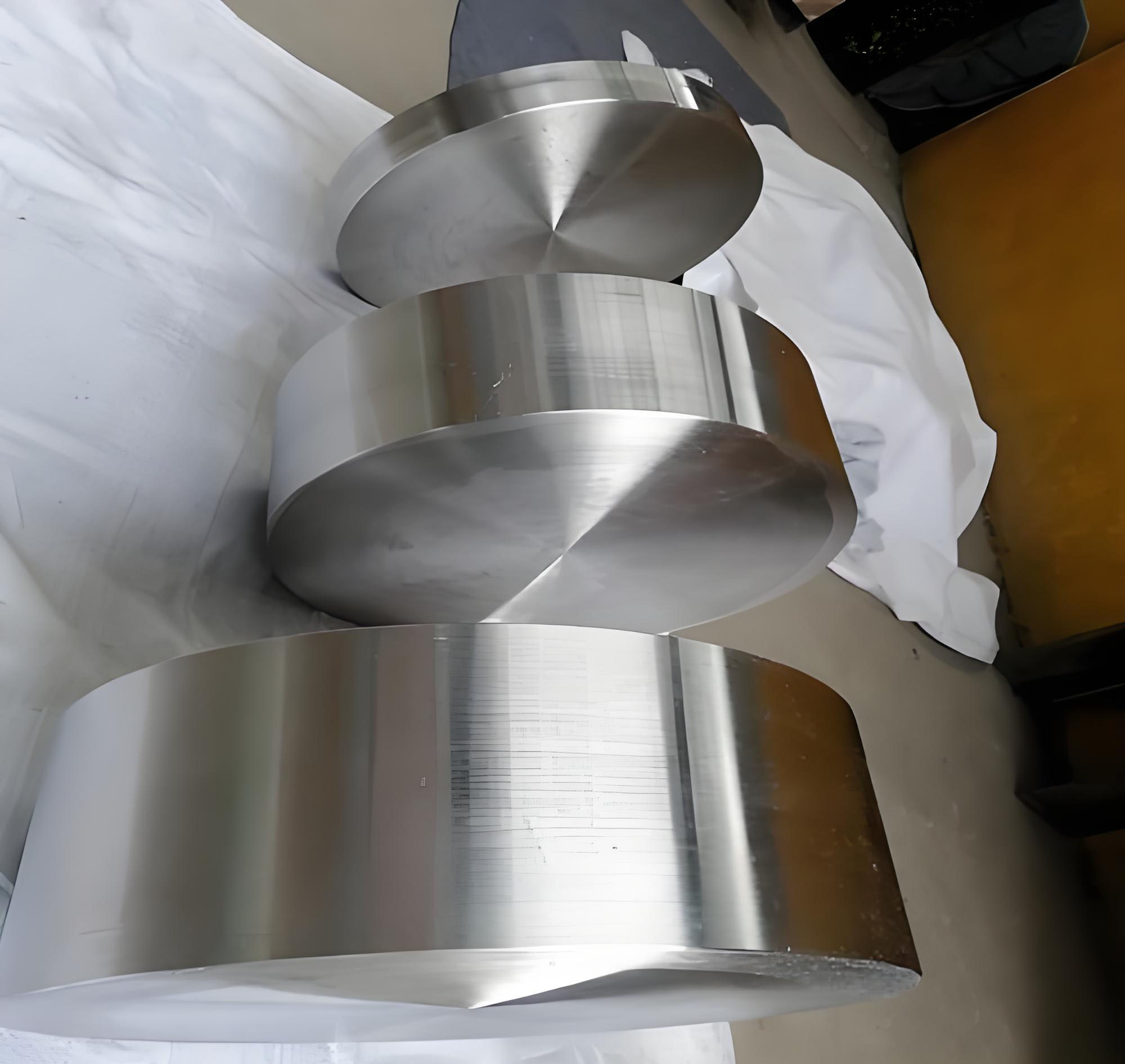
Home > Alloys > Incoloy > Incoloy 925

Nickel Alloy Grade Data Sheet

Incoloy 925

Incoloy 925 is commonly specified for oil and gas components requiring high mechanical strength together with resistance to sour production fluids, seawater and aggressive chemicals. This age-hardenable nickel-iron-chromium alloy contains molybdenum and copper for corrosion resistance and titanium and aluminum for precipitation strengthening. It is used for downhole tubular components, valves, hangers, landing nipples, tool joints, packers, wellhead equipment, high-strength fasteners, marine shafting, pump shafts and corrosion-resistant piping systems.


Material Overview

Incoloy 925 material profile

A concise grade introduction for buyers who need to confirm composition, properties, standards, available forms and suitable applications before sending an inquiry.

Engineering profile

Incoloy 925 is commonly specified for oil and gas components requiring high mechanical strength together with resistance to sour production fluids, seawater and aggressive chemicals. This age-hardenable nickel-iron-chromium alloy contains molybdenum and copper for corrosion resistance and titanium and aluminum for precipitation strengthening. It is used for downhole tubular components, valves, hangers, landing nipples, tool joints, packers, wellhead equipment, high-strength fasteners, marine shafting, pump shafts and corrosion-resistant piping systems.


Incoloy 925

Technical data on this page is for material selection reference. Final acceptance values should be confirmed by the purchase standard, heat treatment condition, product form, size and material test certificate.

Chemical Composition

Incoloy 925 composition range

The following table shows common limiting composition values for Alloy 625 / UNS N06625. Actual product chemistry is reported by heat on the material test certificate.

Element Symbol Typical Requirement Role in Incoloy 925
Nickel Ni 42.0-46.0 Stabilizes the austenitic structure and provides resistance to chloride-ion stress corrosion cracking.
Iron Fe 22.0 min Balances the nickel-base matrix and contributes to the alloy’s mechanical and processing characteristics.
Chromium Cr 19.5-22.5 Provides passivation and resistance to oxidizing environments and general corrosion.
Molybdenum Mo 2.5-3.5 Improves resistance to pitting, crevice corrosion and reducing chemicals.
Copper Cu 1.5-3.0 Improves resistance to sulfuric acid and other reducing environments.
Titanium Ti 1.9-2.4 Combines with aluminum to produce gamma-prime precipitation strengthening.
Aluminum Al 0.10-0.50 Supports the age-hardening reaction and development of high yield strength.
Niobium Nb 0.50 max Controlled minor element that may contribute to strengthening phases.
Carbon C 0.030 max Restricted to control carbide formation and intergranular corrosion behavior.
Manganese Mn 1.0 max Controlled minor alloying and deoxidizing element.
Silicon Si 0.50 max Controlled deoxidizing element and residual constituent.
Sulfur S 0.030 max Controlled impurity for hot-workability and mechanical performance.


Physical Properties

Key physical and thermal data

These values help customers compare density, thermal behavior, magnetic response and conductivity during early material selection.

Property Metric Value Imperial / Notes Condition
Density 8.08 g/cm3 0.292 lb/in3 Room temperature
Melting Range 1311-1366 °C 2392-2490 °F Typical range
Specific Heat 435 J/kg·°C 0.104 Btu/lb·°F At approximately 20 °C
Thermal Conductivity Approx. 12.0 W/m·°C Approx. 83.1 Btu·in/ft2·h·°F At approximately 23 °C
Electrical Resistivity 1.17 µΩ·m 701 ohm-cmil/ft Room temperature
Dynamic Modulus of Elasticity Approx. 199 GPa Approx. 28.9 x 10³ ksi Solution annealed and aged at approximately 21 °C
Mean Thermal Expansion Approx. 13.2 x 10⁻⁶/°C Approx. 7.3 x 10⁻⁶/°F Between 25 and 100 °C
Relative Magnetic Permeability Approx. 1.001 Essentially non-magnetic At 200 oersteds


Mechanical Properties

Room-temperature mechanical properties

Mechanical properties vary with product form, size, processing route and heat treatment. The table below summarizes commonly referenced nominal values for material selection.

Product Form / Condition Tensile Strength Yield Strength, 0.2% Elongation Hardness / Notes
Round bar – solution annealed Approx. 685 MPa Approx. 271 MPa Approx. 56% Approx. Rockwell B 76
Round bar – solution annealed and aged Approx. 1154 MPa Approx. 832 MPa Approx. 27% Approx. Rockwell C 32
Cold-drawn tube – solution annealed and aged Approx. 1189 MPa Approx. 830 MPa Approx. 27% Approx. Rockwell C 35
Cold-worked bar – aged 965 MPa min 724 MPa min 18% min Typical specification limits depend on diameter
Hot-worked bar – aged 965 MPa min 758 MPa min 18% min Typical specification limits depend on diameter
Plate, sheet and strip – annealed By ASTM B872 and purchase specification By specification By specification Normally supplied annealed for subsequent forming and aging


For pressure equipment, aerospace parts or project-specific acceptance, use the minimum requirements in the specified ASTM, ASME, AMS, EN or customer drawing rather than nominal values.

Standards & Specifications

Common Incoloy 925 standards by product form

YSN128 can quote Alloy 625 products according to ASTM, ASME, AMS, EN, DIN, ISO or customer drawing requirements. Certificate scope can be matched to the purchase order.

Product Form Common Standards Typical Supply Item Certificate / Inspection
Plate, Sheet, Strip ASTM B872 or approved customer specification Annealed plate, sheet, strip and cut blanks for subsequent fabrication and aging EN 10204 3.1, chemical, mechanical and heat-treatment records
Rod, Bar, Wire ASTM B805, ASTM B637 or project-specific oil and gas requirements Round bar, flat bar, hexagon, rod, wire and machining stock MTC, PMI, tensile test, hardness and dimensional inspection
Seamless Pipe & Tube ASTM B983, API 5CRA / ISO 13680 where applicable, or customer specification High-strength seamless tube, downhole tubing and mechanical tube Hydrotest or electric test, mechanical test, hardness, PMI and MTC
Forgings ASTM B637, API 6ACRA or approved equipment specification Hangers, landing nipples, tool joints, valve parts and forging stock Heat-treatment record, UT, mechanical test, hardness, PMI and MTC
Fasteners API 20F, API 6ACRA, ASTM B805 or customer-approved bolting specification Bolts, studs, nuts, screws, pins and pressure-control fasteners Mechanical test, hardness, impact test, PMI and traceability records
Wellhead & Completion Components API 6A, API 6ACRA and applicable purchaser specification Wellhead parts, hangers, packers, valve stems and pressure-control components NDT, hardness mapping, mechanical test, PMI and full heat traceability
Sour Oil & Gas Service NACE MR0175 / ISO 15156 subject to material condition and environmental limits Downhole and surface equipment exposed to H2S-containing production fluids Environmental review, hardness control, SSC/SCC qualification and purchaser approval
Pressure Equipment Applicable ASME Code Case and project design specification High-strength piping and pressure-containing components Code-required testing, NDT, heat-treatment documentation and MTC
Welding Products Project-qualified Alloy 725 filler-metal specification 725NDUR-type filler wire for GTAW or GMAW Mill certificate, chemistry verification and welding-procedure qualification


Available Product Forms

Incoloy 925 supply range

Review available product forms, size ranges, standards and delivery options for this alloy.

Form Common Size Range Delivery Condition Typical Applications Page Link
Pipe & Tube OD 6-355 mm, wall thickness or schedule to specification; larger sizes subject to mill review Seamless, cold drawn, solution annealed and aged, or supplied for subsequent aging Downhole tubing, completion equipment, high-strength piping and sour-gas components View Pipe & Tube
Round Bar Diameter 6-300 mm, custom cut lengths and larger forged sections available Hot rolled, forged, cold drawn, solution annealed, aged, peeled or ground Valve stems, hangers, landing nipples, tool joints, pump shafts and packer components View Round Bar
Sheet & Plate Thickness 0.5-80 mm, subject to mill availability and minimum production quantity Annealed, hot or cold rolled, descaled and supplied for subsequent fabrication and aging High-strength corrosion-resistant fabrications, pressure parts and custom equipment View Sheet & Plate
Strip & Foil Thickness 0.05-3 mm, slit widths and coil weights subject to mill capability Cold rolled, annealed or cold worked, with final aging as specified Spring components, retainers, diaphragms, seals and custom formed parts View Strip & Foil
Wire Diameter 0.5-15 mm, supplied in coils, spools or straight lengths Cold drawn, solution annealed, aged, bright or pickled Fasteners, springs, retaining parts and high-strength formed components View Wire
Fasteners Standard and custom bolts, nuts, screws, studs, pins and washers Machined or thread rolled from qualified bar, solution annealed and aged Wellheads, subsea equipment, valves, pumps and sour-service pressure equipment View Fasteners
Fittings Drawing-based dimensions and selected ASME or API configurations Machined from qualified bar, tube or forging stock, solution annealed and aged High-pressure completion systems, sour-gas piping and custom oilfield equipment View Fittings
Flanges ASME, API and custom drawing dimensions, subject to raw-material and design approval Forged, solution annealed, aged, machined and inspected Wellhead systems, high-pressure piping, valves and subsea connections View Flanges
Forgings Rings, blocks, shafts, hubs and drawing-based forgings up to mill capability Forged, solution annealed and aged, rough machined or finish machined Hangers, tool joints, packer parts, valve bodies and pressure-control equipment View Forgings
Welding Wire Diameter 0.8-4.0 mm, supplied in spool, coil or straight length Alloy 725-type clean bright filler wire, precision drawn and chemistry controlled Qualified GTAW and GMAW fabrication or repair of Incoloy 925 components View Welding Wire


Material Selection Guide

When to consider Incoloy 925

This guide helps buyers connect service conditions with the typical advantage of Alloy 625. Final selection should consider medium concentration, temperature, pressure, fabrication, availability and budget.

Service Requirement Why Incoloy 925 Helps Common Product Form Buyer Note
Sour oil and gas production Combines high strength with resistance to sulfide stress cracking and stress corrosion cracking in qualified H2S-containing environments. Tube, bar, forgings and completion components Provide H2S partial pressure, temperature, pH, chloride content, elemental sulfur and required NACE condition.
Downhole completion equipment Age hardening provides high yield strength for loaded components exposed to corrosive production fluids. Hangers, landing nipples, tool joints, packers and valve components Specify pressure rating, load, dimensional tolerances, heat treatment and NDT requirements.
High-strength corrosion-resistant bolting Provides higher strength than solution-annealed corrosion-resistant alloys while retaining useful environmental resistance. Bar, wire, bolts, studs and nuts Confirm API 20F or project bolting class, thread method, hardness and low-temperature impact requirements.
Marine and pump shafting Nickel, chromium, molybdenum and copper provide resistance to seawater and selected reducing environments. Round bar, forgings and finish-machined shafts Review seawater temperature, velocity, deposits, galvanic coupling and required surface finish.
High-strength piping systems Combines precipitation-hardened strength with resistance to general and localized corrosion. Seamless pipe, tube, fittings and forged connections Confirm design code, pressure, temperature, manufacturing route and required heat treatment.
Welded oilfield components Can be joined using Alloy 725-type filler with qualified GTAW or GMAW procedures. Tube, forgings, machined parts and welding wire SAW and SMAW are generally not recommended; specify pre-weld and post-weld heat-treatment sequence.


Why Choose Us

Supply and quality support for Incoloy 925

For ranking traffic, buyers need more than a data sheet. This section gives clear trust signals for procurement, engineering and quality teams.

STASTM / ASME / AMS / EN

Quotation can be matched to project standards and product form specifications.

MTEN10204 3.1 MTC

Heat number, chemistry, mechanical properties and inspection records can be supplied.

QCPMI & Inspection

PMI, UT, dimensional inspection, visual inspection and packing check are available.

CSCustom Size

Cutting, machining allowance, rough machining and drawing-based supply can be arranged.

EPExport Packing

Wooden case, bundle, waterproof protection and international shipping documents.

RFFast Technical Reply

Send grade, size, standard, quantity and destination for a practical quotation route.

FAQ

Incoloy 925 questions from buyers

Find practical answers about procurement, standards, fabrication and industrial applications.

Incoloy 925 is mainly used for downhole tubular components, valves, hangers, landing nipples, tool joints, packers, wellhead equipment, high-strength fasteners, marine shafting, pump shafts and corrosion-resistant high-pressure piping systems.

Yes. UNS N09925 is the standardized UNS designation for Incoloy 925. Unlike some other Incoloy grades, N09925 does not have a widely adopted Werkstoff number or standardized EN alloy name, so UNS N09925 should be stated on purchasing documents.

Incoloy 925 has a corrosion-resistant base chemistry related to Alloy 825 but contains higher controlled titanium together with aluminum. These additions allow gamma-prime precipitation hardening, giving Alloy 925 much higher yield and tensile strength after aging.

YSN128 can quote round bar, flat bar, wire, seamless tube, forging stock, custom forgings, fasteners, machined fittings and drawing-based oilfield components. Plate, sheet and strip can be discussed subject to mill availability and minimum production quantity.

Common standards include ASTM B805 for bar and wire, ASTM B872 for plate, sheet and strip, ASTM B983 for high-strength seamless pipe and tube, ASTM B637 for bars and forgings, and API 6ACRA or API 20F for selected oil and gas components and fasteners.

Solution annealing is commonly performed at 980-1040 °C for 30 minutes to 4 hours, followed by air cooling or faster cooling for sections up to 25 mm and water quenching for larger sections. A typical aging treatment is 732-749 °C for 6-9 hours, furnace cooling to 621 °C and holding for a total aging time of 18 hours, followed by air cooling.

No. The alloy can be supplied for qualified sour-service applications, but compliance depends on material condition, heat treatment, hardness, product form and environmental limits. H2S partial pressure, temperature, pH, chloride concentration and elemental sulfur must be reviewed against the applicable edition of NACE MR0175 / ISO 15156 and the project specification.

Please send UNS N09925, product form, dimensions, quantity, applicable ASTM or API standard, required strength class, heat treatment, hardness limits, certificate requirements and destination. For sour service, also provide the operating temperature, H2S partial pressure, pH, chloride content, elemental sulfur conditions and required NACE documentation.

Request Incoloy 925 Quote

Need Incoloy 925 price, stock or technical support?

Send your required grade, product form, size, quantity, standard, certificate and destination. We will help check availability, production route, inspection scope and practical delivery plan.

Email RFQ

Home Tel Mail Inquiry