Home > Alloys > Nimonic > Nimonic PE16

Nickel Alloy Grade Data Sheet

Nimonic PE16

Nimonic PE16 is commonly specified when high strength, creep resistance, oxidation resistance and good fabrication characteristics are required at temperatures of approximately 500-750 °C. This precipitation-hardenable nickel-chromium-iron alloy is supplied for gas turbine flame tubes, nuclear reactor components, superheater tubing, aircraft ducting, hot aerospace components, high-temperature fasteners and other fabricated assemblies exposed to sustained mechanical and thermal loads.


Material Overview

Nimonic PE16 material profile

A concise grade introduction for buyers who need to confirm composition, properties, standards, available forms and suitable applications before sending an inquiry.

Engineering profile

Nimonic PE16 is commonly specified when high strength, creep resistance, oxidation resistance and good fabrication characteristics are required at temperatures of approximately 500-750 °C. This precipitation-hardenable nickel-chromium-iron alloy is supplied for gas turbine flame tubes, nuclear reactor components, superheater tubing, aircraft ducting, hot aerospace components, high-temperature fasteners and other fabricated assemblies exposed to sustained mechanical and thermal loads.


Nimonic PE16

Technical data on this page is for material selection reference. Final acceptance values should be confirmed by the purchase standard, heat treatment condition, product form, size and material test certificate.

Chemical Composition

Nimonic PE16 composition range

The following table shows common limiting composition values for Alloy 625 / UNS N06625. Actual product chemistry is reported by heat on the material test certificate.

Element Symbol Typical Requirement Role in Alloy PE16
Nickel plus Cobalt Ni + Co 42.0-45.0 Forms the principal high-temperature alloy matrix and supports phase stability.
Iron Fe Balance Balances the alloy matrix and contributes to its strength and fabrication characteristics.
Chromium Cr 15.5-17.5 Provides oxidation and hot-corrosion resistance through formation of a protective oxide scale.
Molybdenum Mo 2.8-3.8 Provides solid-solution strengthening and improves creep resistance.
Aluminum Al 1.1-1.3 Combines with nickel and titanium to form the gamma-prime strengthening phase.
Titanium Ti 1.1-1.3 Supports precipitation hardening and elevated-temperature strength.
Cobalt Co 2.0 max Controlled as part of the nickel-plus-cobalt requirement.
Carbon C 0.04-0.08 Supports carbide formation and control of the grain-boundary microstructure.
Zirconium Zr 0.02-0.04 Improves grain-boundary strength and creep-rupture performance.
Silicon Si 0.50 max Controlled residual and deoxidizing element.
Copper Cu 0.50 max Controlled residual element.
Manganese Mn 0.20 max Controlled minor element used during melting and deoxidation.
Sulfur S 0.015 max Controlled impurity for hot workability and material quality.
Boron B 0.005 max Controlled microalloying element affecting grain-boundary behavior.
Silver Ag 0.0005 max Strictly controlled trace element.
Lead Pb 0.0015 max Strictly controlled trace impurity.
Bismuth Bi 0.0001 max Strictly controlled trace impurity for high-temperature ductility.


Physical Properties

Key physical and thermal data

These values help customers compare density, thermal behavior, magnetic response and conductivity during early material selection.

Property Metric Value Imperial / Notes Condition
Density 8.00 g/cm3 0.289 lb/in3 Dependent on composition, form and heat treatment
Melting Range 1310-1355 °C 2390-2471 °F Solidus to liquidus
Specific Heat 544 J/kg·°C Approx. 0.130 Btu/lb·°F Mean value from 20-400 °C
Thermal Conductivity 11.72 W/m·°C Approx. 81 Btu·in/ft2·h·°F 20 °C
Electrical Resistivity Approx. 1.10 µΩ·m Approx. 43.3 µΩ·in 20 °C
Dynamic Young’s Modulus 198 GPa Approx. 28.7 x 10³ ksi 20 °C
Dynamic Torsional Modulus 74 GPa Approx. 10.7 x 10³ ksi 20 °C
Mean Thermal Expansion 13.8 µm/m·°C Approx. 7.7 µin/in·°F 20-100 °C


Mechanical Properties

Room-temperature mechanical properties

Mechanical properties vary with product form, size, processing route and heat treatment. The table below summarizes commonly referenced nominal values for material selection.

Product Form / Condition Tensile Strength Yield Strength, 0.2% Elongation Hardness
Sheet – solution annealed at 1040 °C Approx. 678 MPa Approx. 255 MPa Approx. 42% Approx. 163 HV
Bar – solution treated and aged at 900/750 °C Approx. 830 MPa Approx. 450 MPa Approx. 29% By specification
Bar – solution treated and aged at 800/700 °C Approx. 880 MPa Approx. 525 MPa Approx. 37% By specification
Sheet – solution treated and aged at 900/750 °C Approx. 950 MPa Approx. 539 MPa Approx. 26.9% By specification
Sheet – solution treated and aged at 800/700 °C Approx. 993 MPa Approx. 607 MPa Approx. 25.2% By specification
Bar – 600 °C test, aged at 900/750 °C Approx. 680 MPa Approx. 410 MPa Approx. 30% Not normally specified
Bar – 600 °C test, aged at 800/700 °C Approx. 730 MPa Approx. 475 MPa Approx. 27% Not normally specified
Sheet – 700 °C test, aged at 900/750 °C Approx. 672 MPa Approx. 489 MPa Approx. 36.8% Not normally specified


For pressure equipment, aerospace parts or project-specific acceptance, use the minimum requirements in the specified ASTM, ASME, AMS, EN or customer drawing rather than nominal values.

Standards & Specifications

Common Nimonic PE16 standards by product form

YSN128 can quote Alloy 625 products according to ASTM, ASME, AMS, EN, DIN, ISO or customer drawing requirements. Certificate scope can be matched to the purchase order.

Product Form Common Standards Typical Supply Item Certificate / Inspection
Plate, Sheet, Strip BS 2HR 207, BS HR 207, AFNOR NW 11 AC, RRMS 33021/2 or project specification Hot rolled plate, cold rolled sheet, strip and fabricated blanks EN10204 3.1, chemical analysis, tensile test and heat-treatment record
Billet, Bar and Extruded Sections BS 2HR 55, BS HR 55, RRMS 33021/2, MSRR 7952 Round bar, flat bar, billet and extruded sections Heat-treatment record, tensile test, hardness test, ultrasonic inspection and MTC
Forgings and Forging Stock BS 2HR 55, BS HR 55, RRMS 33021/2, MSRR 7952 or drawing specification Rings, discs, blocks, shafts and custom forgings Tensile test, creep or stress-rupture test when specified, UT and MTC
Pipe and Tube Customer specification, manufacturer release specification or approved aerospace specification Cold drawn tube, superheater tube and fabricated tubular components Eddy current or ultrasonic test, pressure test, dimensional inspection and MTC
Wire Customer specification, RRMS specification or approved drawing requirements Cold drawn wire, straight lengths and welding wire Chemical analysis, tensile test, dimensional inspection and MTC
Fasteners BS 2HR 55 material or customer fastener specification Bolts, nuts, studs, screws and high-temperature fastening components Tensile test, hardness test, dimensional inspection and material traceability
Flanges and Fittings BS 2HR 55 material with ASME, EN or drawing-based dimensions Machined flanges, rings, elbows and special high-temperature fittings PMI, dimensional inspection, NDT and MTC
Welding Products Nimonic filler metal PE16 or a project-approved welding procedure Matching-composition TIG or MIG welding wire Consumable certificate, chemical analysis and welding procedure qualification


Available Product Forms

Nimonic PE16 supply range

Review available product forms, size ranges, standards and delivery options for this alloy.

Form Common Size Range Delivery Condition Typical Applications Page Link
Pipe & Tube OD 6-610 mm, wall thickness and length to specification Cold drawn, seamless or fabricated, solution treated and aged as required Superheater tubing, aircraft ducting, reactor components and hot-gas systems View Pipe & Tube
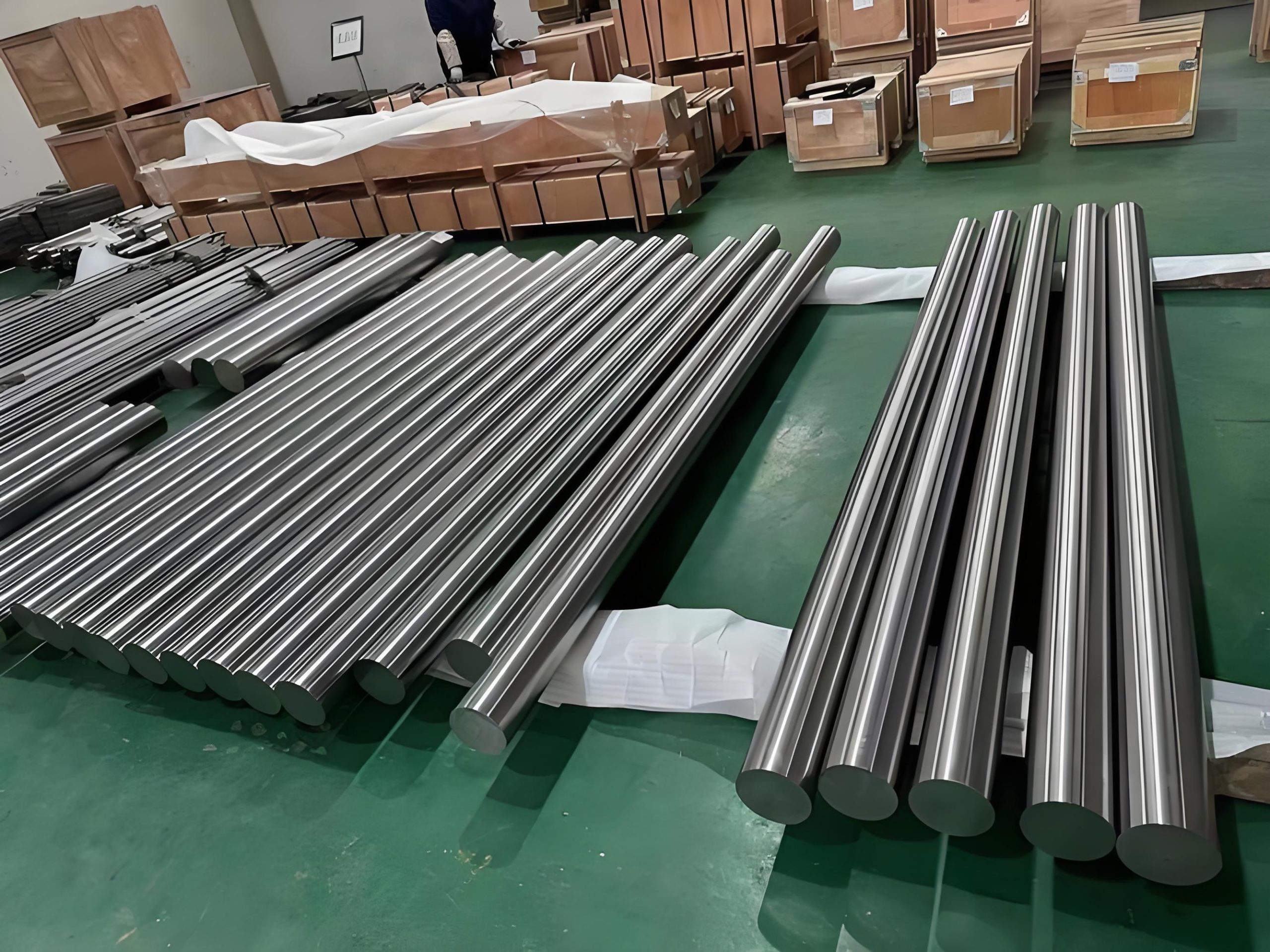
Round Bar Diameter 3-500 mm, custom cut lengths available Hot rolled, forged, extruded, solution treated, aged, peeled or ground High-temperature fasteners, shafts, turbine components and machined parts View Round Bar
Sheet & Plate Thickness 0.5-150 mm, custom widths and lengths Hot rolled, cold rolled, solution treated, aged, pickled or polished Flame tubes, hot structures, aircraft ducting and nuclear components View Sheet & Plate
Strip & Foil Thickness 0.02-6 mm, slit widths to specification Cold rolled, solution treated, aged, bright finished or coil supplied Heat shields, flexible components, seals and precision aerospace parts View Strip & Foil
Wire Diameter 0.1-20 mm, coil, spool or straight-length supply Cold drawn, solution treated, aged, bright or pickled High-temperature fasteners, woven components, springs and welding products View Wire
Fasteners Standard and custom bolts, nuts, studs, screws and washers Machined or thread rolled, solution treated and precipitation hardened Gas turbines, aircraft assemblies, nuclear equipment and hot structural systems View Fasteners
Fittings ASME, EN and custom drawing dimensions Machined from bar, tube or forgings and heat treated to specification Superheater systems, aircraft ducting and high-temperature process assemblies View Fittings
Flanges ASME B16.5, ASME B16.47, EN and custom specifications Forged, solution treated, aged, machined and inspected Hot-gas piping, test equipment and high-temperature pressure assemblies View Flanges
Forgings Rings, discs, blocks and shafts up to project-specific dimensions Forged, solution treated, precipitation hardened, rough or finish machined Turbine parts, reactor components, pressure parts and aerospace hardware View Forgings
Welding Wire Diameter 0.8-4.0 mm, spool, coil or straight-length supply Matching-composition PE16 wire, clean finished and chemistry controlled TIG and dip-transfer MIG welding of Nimonic PE16 assemblies View Welding Wire


Material Selection Guide

When to consider Nimonic PE16

This guide helps buyers connect service conditions with the typical advantage of Alloy 625. Final selection should consider medium concentration, temperature, pressure, fabrication, availability and budget.

Service Requirement Why Alloy PE16 Helps Common Product Form Buyer Note
Service at approximately 500-750 °C Combines precipitation strengthening with molybdenum solid-solution strengthening for sustained elevated-temperature loads. Sheet, plate, bar, tube and forgings Confirm the maximum metal temperature, load, exposure time and thermal cycling.
Gas turbine flame tubes Provides useful high-temperature strength, oxidation resistance and good sheet fabrication characteristics. Sheet, plate, strip and welded assemblies Specify sheet thickness, forming condition, weld procedure and final heat treatment.
Superheater tubing Maintains strength and creep resistance in elevated-temperature steam and hot-gas systems. Seamless tube and fabricated tubular components Confirm pressure, design temperature, tube dimensions and inspection method.
Nuclear reactor components Offers elevated-temperature strength, metallurgical stability and established nuclear-service experience. Tube, sheet, bar, wire and forgings State the applicable nuclear specification, grain-size requirement and inspection level.
High-temperature fasteners Age hardening provides increased proof strength while retaining useful ductility. Round bar, wire, bolts, studs and nuts Specify required proof strength, thread dimensions and final aging treatment.
Fabricated aerospace ducting Can be cold formed and welded in the solution-treated condition before final aging. Sheet, strip, tube and welding wire Control forming strain, weld cleanliness and post-weld heat treatment.
Creep-resistant components Molybdenum and gamma-prime precipitation provide useful resistance to time-dependent deformation. Bar, plate, tube and forgings Specify design life, operating stress and required creep or stress-rupture testing.
Welded high-temperature assemblies Matching PE16 filler wire and suitable post-weld aging can develop useful properties in the weld and heat-affected zone. Sheet, plate, tube and welding wire Use TIG or dip-transfer MIG procedures and avoid unqualified spray-transfer welding.


Why Choose Us

Supply and quality support for Nimonic PE16

For ranking traffic, buyers need more than a data sheet. This section gives clear trust signals for procurement, engineering and quality teams.

STASTM / ASME / AMS / EN

Quotation can be matched to project standards and product form specifications.

MTEN10204 3.1 MTC

Heat number, chemistry, mechanical properties and inspection records can be supplied.

QCPMI & Inspection

PMI, UT, dimensional inspection, visual inspection and packing check are available.

CSCustom Size

Cutting, machining allowance, rough machining and drawing-based supply can be arranged.

EPExport Packing

Wooden case, bundle, waterproof protection and international shipping documents.

RFFast Technical Reply

Send grade, size, standard, quantity and destination for a practical quotation route.

FAQ

Nimonic PE16 questions from buyers

Find practical answers about procurement, standards, fabrication and industrial applications.

Nimonic PE16 is mainly used for gas turbine flame tubes, nuclear reactor parts, superheater tubing, aircraft ducting, hot aerospace components, high-temperature fasteners and fabricated assemblies operating under sustained thermal and mechanical loads.

The original Special Metals technical bulletin does not publish an official UNS designation for Nimonic PE16. Some commercial sources use additional cross-reference numbers, but buyers should specify Nimonic PE16 together with the required chemical composition and product standard.

Nimonic PE16 was developed primarily for service between approximately 500 and 750 °C. The permitted temperature for a specific component depends on stress, exposure time, atmosphere, section thickness and the required design life.

The alloy is strengthened by molybdenum in solid solution and by gamma-prime precipitates formed from nickel, aluminum and titanium during aging. The final properties therefore depend strongly on the solution treatment and aging cycle.

YSN128 can quote plate, sheet, strip, round bar, rod, wire, pipe, tube, forgings, fasteners, flanges, fittings and matching-composition welding wire. Non-standard forms and large dimensions are subject to production and technical confirmation.

Common specifications include BS 2HR 55 for billets, bars, extruded sections and forgings, BS 2HR 207 for plate, sheet and strip, AFNOR NW 11 AC and Rolls-Royce specifications RRMS 33021/2 or MSRR 7952. Customer drawings and project specifications are also frequently used.

A common general-purpose treatment is solution treatment at 1040 °C followed by aging for 1 hour at 900 °C and 8 hours at 750 °C, with air cooling after each stage. An alternative 800/700 °C aging treatment may be selected when higher proof strength is required. The final cycle must match the product specification.

Yes. TIG and dip-transfer MIG welding are commonly used. Welding should normally be performed in the annealed or solution-treated condition, using matching PE16 filler wire for thicker joints, followed by the specified post-weld aging treatment. Spray-transfer MIG welding is generally avoided because of cracking risk.

Yes. EN10204 3.1 material certificates can be supplied on request with heat traceability, chemical composition, mechanical test results, heat-treatment records and applicable dimensional or nondestructive inspection results.

Please send the grade, product form, dimensions, quantity, applicable BS, RRMS or customer specification, delivery condition, heat-treatment requirement, mechanical properties, inspection requirements and destination. Drawings and service temperature information are also recommended.

Request Nimonic PE16 Quote

Need Nimonic PE16 price, stock or technical support?

Send your required grade, product form, size, quantity, standard, certificate and destination. We will help check availability, production route, inspection scope and practical delivery plan.

Email RFQ

Home Tel Mail Inquiry