Home > Alloys > Nimonic > Nimonic 75

Nickel Alloy Grade Data Sheet

Nimonic 75

Nimonic 75 is commonly specified for fabricated components requiring good oxidation and scaling resistance together with moderate strength at elevated temperatures. This nickel-chromium alloy contains controlled additions of titanium and carbon and offers good formability and weldability. It is widely used for gas-turbine sheet-metal components, industrial furnaces, heat-treatment equipment, thermal-processing fixtures, nuclear engineering components and other high-temperature static applications.


Material Overview

Nimonic 75 material profile

A concise grade introduction for buyers who need to confirm composition, properties, standards, available forms and suitable applications before sending an inquiry.

Engineering profile

Nimonic 75 is commonly specified for fabricated components requiring good oxidation and scaling resistance together with moderate strength at elevated temperatures. This nickel-chromium alloy contains controlled additions of titanium and carbon and offers good formability and weldability. It is widely used for gas-turbine sheet-metal components, industrial furnaces, heat-treatment equipment, thermal-processing fixtures, nuclear engineering components and other high-temperature static applications.


Nimonic 75

Technical data on this page is for material selection reference. Final acceptance values should be confirmed by the purchase standard, heat treatment condition, product form, size and material test certificate.

Chemical Composition

Nimonic 75 composition range

The following table shows common limiting composition values for Alloy 625 / UNS N06625. Actual product chemistry is reported by heat on the material test certificate.

Element Symbol Typical Requirement Role in Nimonic 75
Nickel Ni Balance Base element providing metallurgical stability, ductility and corrosion resistance.
Chromium Cr 18.0-21.0 Provides resistance to oxidation and scaling at elevated temperatures.
Carbon C 0.08-0.15 Supports carbide formation and contributes to elevated-temperature strength.
Titanium Ti 0.20-0.60 Controls carbide and carbonitride formation and supports structural stability.
Iron Fe 5.0 max Controlled residual element within the nickel-chromium matrix.
Manganese Mn 1.0 max Controlled minor element used during alloy production.
Silicon Si 1.0 max Controlled minor element affecting oxidation and processing behavior.
Copper Cu 0.50 max Controlled residual element.


Physical Properties

Key physical and thermal data

These values help customers compare density, thermal behavior, magnetic response and conductivity during early material selection.

Property Metric Value Imperial / Notes Condition
Density 8.37 g/cm3 0.302 lb/in3 Room temperature
Melting Range 1340-1380 °C 2444-2516 °F Typical range
Specific Heat 461 J/kg·°C 0.110 Btu/lb·°F At 20 °C
Thermal Conductivity 11.7 W/m·°C 81.1 Btu·in/ft2·h·°F At 20 °C
Electrical Resistivity 1.09 µΩ·m 656 ohm-cmil/ft At 20 °C
Dynamic Modulus of Elasticity 221 GPa 32.1 x 10³ ksi At 20 °C, fully heat treated
Mean Thermal Expansion 11.0 x 10⁻⁶/°C 6.0 x 10⁻⁶/°F Between 20 and 100 °C


Mechanical Properties

Room-temperature mechanical properties

Mechanical properties vary with product form, size, processing route and heat treatment. The table below summarizes commonly referenced nominal values for material selection.

Product Form / Condition Tensile Strength Yield Strength, 0.2% Elongation Notes
Sheet and plate – annealed Approx. 700-800 MPa Approx. 275-410 MPa 30-45% Representative room-temperature values
Rod and bar – annealed Approx. 650-800 MPa Approx. 240-350 MPa 30-50% Condition and section size dependent
Wire – annealed Approx. 700-800 MPa By specification By specification Typical commercial annealed wire range
Wire – cold worked / spring temper Approx. 1200-1500 MPa By reduction and temper By specification Cold-worked wire only; not an annealed alloy value
Pipe and tube – annealed By BS HR 403 or applicable specification By specification By specification Final values depend on dimensions and manufacturing route
Forging stock and forgings By BS HR 5, BS HR 504 or purchase specification By specification By specification Heat treatment and section size dependent


For pressure equipment, aerospace parts or project-specific acceptance, use the minimum requirements in the specified ASTM, ASME, AMS, EN or customer drawing rather than nominal values.

Standards & Specifications

Common Nimonic 75 standards by product form

YSN128 can quote Alloy 625 products according to ASTM, ASME, AMS, EN, DIN, ISO or customer drawing requirements. Certificate scope can be matched to the purchase order.

Product Form Common Standards Typical Supply Item Certificate / Inspection
Plate, Sheet, Strip BS HR 203, DIN 17750, ISO 6208, AECMA PrEN 2293 / 2302 / 2411 Hot rolled plate, cold rolled sheet, strip and cut blanks EN 10204 3.1, chemical and mechanical test
Rod, Bar, Wire BS HR 5, BS HR 504, DIN 17752, ISO 9723 / 9724 / 9725, AECMA PrEN 2306 / 2307 / 2402 Round bar, rod, wire, forging stock and extruded section MTC, PMI and dimensional inspection
Pipe & Tube BS HR 403, DIN 17751, ISO 6207, AECMA PrEN 2294 Seamless tube, welded tube and fabricated pipe Hydrotest, eddy current test and MTC as specified
Forgings BS HR 5, BS HR 504, DIN 17752 or customer specification Rings, discs, blocks, shafts and drawing-based forgings Heat-treatment record, UT, PMI and MTC
Machined Fittings & Flanges Applicable dimensional standard plus approved N06075 raw-material specification Elbows, reducers, flanges, rings and special machined parts Dimensional inspection, PMI, NDT and MTC
Welding Products Matching-composition supplier specification or project-approved welding procedure Welding wire and consumables for fabrication or repair Mill certificate, chemistry verification and welding inspection


Available Product Forms

Nimonic 75 supply range

Review available product forms, size ranges, standards and delivery options for this alloy.

Form Common Size Range Delivery Condition Typical Applications Page Link
Pipe & Tube OD 6-610 mm, wall thickness or schedule to specification; large fabricated sizes subject to review Seamless, welded or fabricated, solution annealed and pickled Thermocouple sheathing, furnace equipment, gas-turbine parts and high-temperature ducting View Pipe & Tube
Round Bar Diameter 3-300 mm, with custom cut lengths and larger forged sections available Hot rolled, forged, annealed, peeled, ground or polished Furnace hardware, shafts, fasteners and machined high-temperature components View Round Bar
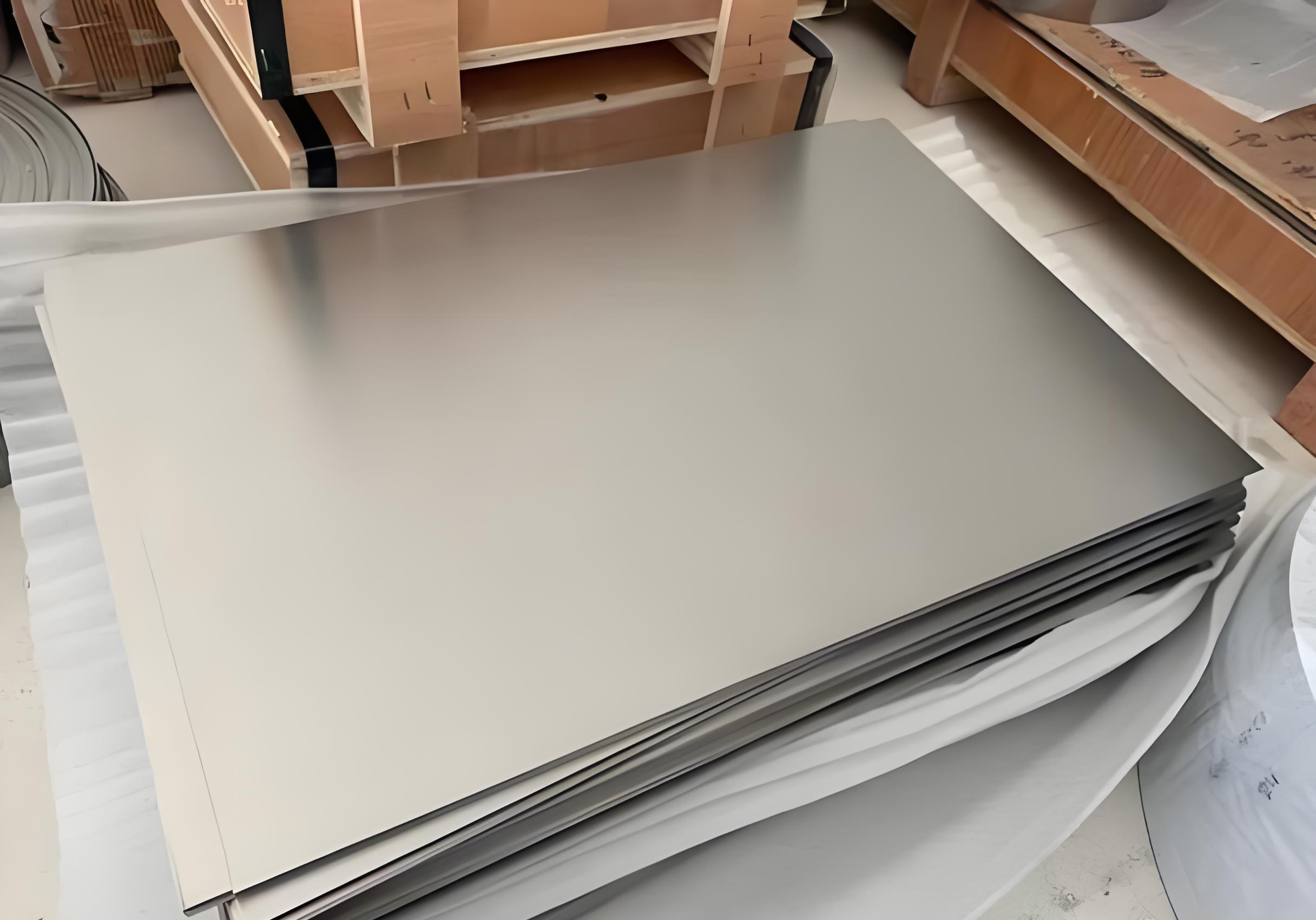
Sheet & Plate Thickness 0.5-100 mm, custom widths, lengths and cut profiles Solution annealed, pickled, cold rolled or polished Combustion components, furnace linings, heat shields, trays and fabricated assemblies View Sheet & Plate
Strip & Foil Thickness 0.02-3 mm, slit widths and coil weights to specification Cold rolled, annealed, bright finished or spring temper Heat shields, seals, flexible components and thermal-processing parts View Strip & Foil
Wire Diameter 0.1-12 mm, supplied in coils, spools or straight lengths Cold drawn, annealed, spring temper, bright or pickled High-temperature fasteners, mesh, furnace components and formed wire parts View Wire
Fasteners Standard and custom bolts, nuts, screws, studs, pins and washers Machined or cold formed from approved bar or wire, annealed or work strengthened Gas turbines, furnace assemblies, thermal-processing equipment and aerospace hardware View Fasteners
Fittings ASME, EN and drawing-based dimensions, including special fabricated sizes Machined, formed or welded, solution annealed where required High-temperature piping, instrument systems, furnace equipment and fabricated assemblies View Fittings
Flanges ASME B16.5, ASME B16.47, EN and custom drawing dimensions Forged, solution annealed, machined and inspected High-temperature ducting, process connections, furnace systems and equipment nozzles View Flanges
Forgings Rings, discs, blocks, shafts and custom components up to mill capability Forged, solution heat treated, rough machined or finish machined Gas-turbine components, furnace fixtures and high-temperature structural parts View Forgings
Welding Wire Diameter 0.8-4.0 mm, supplied in spool, coil or straight length Clean bright finish, precision drawn and chemistry controlled Joining Nimonic 75, repair welding and fabrication of high-temperature assemblies View Welding Wire


Material Selection Guide

When to consider Nimonic 75

This guide helps buyers connect service conditions with the typical advantage of Alloy 625. Final selection should consider medium concentration, temperature, pressure, fabrication, availability and budget.

Service Requirement Why Nimonic 75 Helps Common Product Form Buyer Note
Oxidation and scaling resistance Its nickel-chromium matrix develops a protective oxide layer in high-temperature oxidizing atmospheres. Sheet, plate, strip, tube and fabricated assemblies Confirm peak temperature, atmosphere, thermal cycling and required service life.
Industrial furnace equipment Combines oxidation resistance with useful strength and good fabricability at elevated temperatures. Sheet, plate, bar, wire and forgings Provide operating temperature, load and furnace atmosphere.
Gas-turbine sheet fabrication Good formability and weldability support the production of combustion and exhaust-system components. Sheet, strip, tube and welding wire Confirm the applicable aerospace or customer material specification.
Heat-treatment fixtures Resists repeated heating while retaining useful dimensional stability in low-to-moderate stress service. Bar, wire, sheet, plate and forgings Specify fixture load, cycle time and maximum operating temperature.
High-temperature welded assemblies The alloy is readily welded by TIG, MIG, MMA and other approved processes when properly prepared. Sheet, plate, pipe, tube and welding wire Use qualified procedures and confirm filler-metal compatibility.
High-temperature static components Nimonic 75 provides oxidation resistance and moderate strength without requiring precipitation-hardening treatment. Sheet, bar, fasteners, forgings and fabricated parts For highly stressed creep service, compare Nimonic 80A, 90 or 263.


Why Choose Us

Supply and quality support for Nimonic 75

For ranking traffic, buyers need more than a data sheet. This section gives clear trust signals for procurement, engineering and quality teams.

STASTM / ASME / AMS / EN

Quotation can be matched to project standards and product form specifications.

MTEN10204 3.1 MTC

Heat number, chemistry, mechanical properties and inspection records can be supplied.

QCPMI & Inspection

PMI, UT, dimensional inspection, visual inspection and packing check are available.

CSCustom Size

Cutting, machining allowance, rough machining and drawing-based supply can be arranged.

EPExport Packing

Wooden case, bundle, waterproof protection and international shipping documents.

RFFast Technical Reply

Send grade, size, standard, quantity and destination for a practical quotation route.

FAQ

Nimonic 75 questions from buyers

Find practical answers about procurement, standards, fabrication and industrial applications.

Nimonic 75 is mainly used for gas-turbine sheet-metal components, industrial furnaces, heat-treatment fixtures, thermal-processing equipment, high-temperature fasteners, thermocouple sheathing and nuclear engineering components requiring oxidation resistance and moderate elevated-temperature strength.

Yes. UNS N06075 is the standardized UNS designation for Nimonic 75. The alloy may also be identified as Alloy 75, W.Nr. 2.4951, W.Nr. 2.4630, NiCr20Ti or AFNOR NC20T.

No. Nimonic 75 is primarily a solid-solution-strengthened nickel-chromium alloy with controlled titanium and carbon additions. It does not obtain its main strength from the precipitation-hardening treatment used for alloys such as Nimonic 80A or Nimonic 90.

YSN128 can quote plate, sheet, strip, round bar, rod, wire, pipe, tube, forgings, fasteners, flanges, fittings and welding wire. Custom cutting, forming, machining allowance and drawing-based production can also be discussed.

Common standards include BS HR 203 for plate, sheet and strip; BS HR 403 for pipe and tube; BS HR 5 and BS HR 504 for rod, bar, wire and forging stock; DIN 17750-17752; ISO 6207, ISO 6208 and relevant ISO 9723-series specifications.

Yes. Nimonic 75 can be welded using TIG, MIG, MMA, submerged-arc, resistance and other qualified processes. The material should normally be annealed before welding, and joint surfaces must be thoroughly cleaned. Matching-composition or project-approved filler metal should be selected through the welding procedure.

Nimonic 75 is best suited to low-to-moderate stress components requiring oxidation resistance and fabricability. For highly stressed components requiring greater creep or stress-rupture strength, precipitation-hardened alloys such as Nimonic 80A, Nimonic 90 or Nimonic 263 should also be evaluated.

Please send the grade or UNS number, product form, dimensions, quantity, applicable standard, delivery condition, certificate requirements, destination and operating temperature. Drawings, tolerances, surface-finish requirements and inspection requirements are also welcome.

Request Nimonic 75 Quote

Need Nimonic 75 price, stock or technical support?

Send your required grade, product form, size, quantity, standard, certificate and destination. We will help check availability, production route, inspection scope and practical delivery plan.

Email RFQ

Home Tel Mail Inquiry