Home > Alloys > Cobalt Alloys > Cobalt STELLITE-21

Nickel Alloy Grade Data Sheet

Cobalt STELLITE-21

STELLITE® 21 is a low-carbon cobalt-chromium-molybdenum alloy with a tough cobalt matrix and a relatively low volume fraction of dispersed carbides. It provides excellent cavitation, galling, metal-to-metal sliding wear, corrosion and thermal-shock resistance, together with better impact tolerance than higher-carbide Stellite grades. Typical applications include valve trim, pump components, erosion-resistant parts, forging and hot-stamping dies, petrochemical equipment, power-generation hardware, medical castings and qualified weld-hardfacing overlays.


Material Overview

Cobalt STELLITE-21 material profile

A concise grade introduction for buyers who need to confirm composition, properties, standards, available forms and suitable applications before sending an inquiry.

Engineering profile

STELLITE® 21 is a low-carbon cobalt-chromium-molybdenum alloy with a tough cobalt matrix and a relatively low volume fraction of dispersed carbides. It provides excellent cavitation, galling, metal-to-metal sliding wear, corrosion and thermal-shock resistance, together with better impact tolerance than higher-carbide Stellite grades. Typical applications include valve trim, pump components, erosion-resistant parts, forging and hot-stamping dies, petrochemical equipment, power-generation hardware, medical castings and qualified weld-hardfacing overlays.


Cobalt STELLITE-21

Technical data on this page is for material selection reference. Final acceptance values should be confirmed by the purchase standard, heat treatment condition, product form, size and material test certificate.

Chemical Composition

Cobalt STELLITE-21 composition range

The following table shows common limiting composition values for Alloy 625 / UNS N06625. Actual product chemistry is reported by heat on the material test certificate.

Element Symbol Typical Requirement, wt.% Role in STELLITE 21
Cobalt Co Balance Forms the tough cobalt-base matrix.
Chromium Cr 26.0-29.0 Provides passivation, corrosion resistance and carbide formation.
Molybdenum Mo 4.5-6.0 Strengthens the matrix and improves localized corrosion and wear resistance.
Carbon C 0.35 max Controls the amount and morphology of hard carbides; low carbon improves toughness.
Nickel Ni 3.0 max Controlled matrix-stabilizing and residual element.
Iron Fe 3.0 max Controlled residual element.
Silicon Si 2.0 max Controlled processing and residual element.
Manganese Mn Controlled residual May be present as a minor processing element.


Physical Properties

Key physical and thermal data

These values help customers compare density, thermal behavior, magnetic response and conductivity during early material selection.

Property Metric Value Imperial / Additional Value Condition / Notes
Density Approximately 8.33 g/cm3 Approximately 0.301 lb/in3 Representative Stellite 21 value
Melting Range 1295-1435 °C 2360-2615 °F Composition and process dependent
Elastic Modulus Approximately 210-220 GPa Approximately 30-32 x 103 ksi Representative cobalt-alloy range
Thermal Conductivity Approximately 14-16 W/m·°C Temperature dependent Representative range
Mean Coefficient of Thermal Expansion Approximately 13-15 µm/m·°C Temperature dependent Representative range
Specific Heat Approximately 430-500 J/kg·°C Temperature dependent Representative range
Magnetic Behavior Low magnetic response in typical cobalt-alloy conditions Verify for magnetic-sensitive equipment Microstructure and processing dependent
Work-Hardened Surface Hardness Up to approximately 550 HV Approximately 48 HRC Higher values may develop during service or machining


Mechanical Properties

Room-temperature mechanical properties

Mechanical properties vary with product form, size, processing route and heat treatment. The table below summarizes commonly referenced nominal values for material selection.

Product / Condition Tensile Strength Yield Strength, 0.2% Elongation Condition / Notes
Investment casting, as cast Approximately 710 MPa Approximately 565 MPa Less than 3% Representative casting data; not a universal guarantee
Weld deposit, undiluted Condition dependent Condition dependent Condition dependent Hardness and ductility depend on process, substrate and dilution
Cast or PM/HIP component Approximately 700-900 MPa Approximately 500-700 MPa Approximately 2-10% Representative range only; geometry and heat treatment are significant
As-cast hot hardness, room temperature Approximately 347 HV / 35 HRC Representative undiluted or cast-alloy value
Hot hardness, 400 °C Approximately 208 HV Representative as-cast or undiluted deposit value
Hot hardness, 600 °C Approximately 181 HV Representative as-cast or undiluted deposit value
Hot hardness, 800 °C Approximately 123 HV Representative as-cast or undiluted deposit value
Stellite 21 properties are strongly dependent on casting, powder, weld-deposition or HIP route, carbide distribution, dilution, heat treatment and test specimen geometry.


For pressure equipment, aerospace parts or project-specific acceptance, use the minimum requirements in the specified ASTM, ASME, AMS, EN or customer drawing rather than nominal values.

Standards & Specifications

Common Cobalt STELLITE-21 standards by product form

YSN128 can quote Alloy 625 products according to ASTM, ASME, AMS, EN, DIN, ISO or customer drawing requirements. Certificate scope can be matched to the purchase order.

Product Form / Requirement Common Standard Scope Buyer Note
Castings AMS 5385 Stellite 21 corrosion- and heat-resistant cobalt-alloy castings Confirm casting method, heat treatment, NDE and dimensional requirements.
Rod and Welding Wire AMS 5819 Stellite 21 cobalt-alloy rod and wire products Specify rod or wire process, diameter, packaging and chemistry limits.
GTAW Welding Rod AWS A5.21 / ASME SFA-5.21 ERCoCr-E Matching or qualified cobalt-alloy welding rod Use a qualified procedure and control dilution, heat input and interpass temperature.
GMAW Welding Wire AWS A5.21 / ASME SFA-5.21 ERC oCr-E Qualified cobalt-alloy wire for gas-metal-arc deposition Verify the exact classification spelling and current code edition on the purchase specification.
Coated Electrodes AWS A5.13 / ASME SFA-5.13 ECoCr-E Covered electrodes for cobalt-alloy hardfacing Select for repair or overlay work rather than assuming equivalence to cast products.
Wire UNS UNS W73041 Stellite 21 wire product identification UNS identification does not replace the required product specification.
Electrode UNS UNS W73021 Stellite 21 coated-electrode identification Confirm coating type, diameter and welding position requirements.
Solution and Aging Treatment Project-specific, approximately 1200-1240 °C solution treatment Optional treatment to improve high-temperature strength and structure Quench and aging cycles must be qualified for the specific casting or component.
Pipe, Tube and Fittings No ordinary general-purpose specification listed Custom cast, machined or hardfaced components Use drawing-based supply with agreed inspection and service requirements.


Available Product Forms

Cobalt STELLITE-21 supply range

Review available product forms, size ranges, standards and delivery options for this alloy.

Form Common Size Range Delivery Condition Typical Applications Page Link
Pipe & Tube Custom cast, machined or hardfaced tubular components As cast, PM/HIP, machined or project-specific Valve sleeves, pump components and erosive-service assemblies View Pipe & Tube
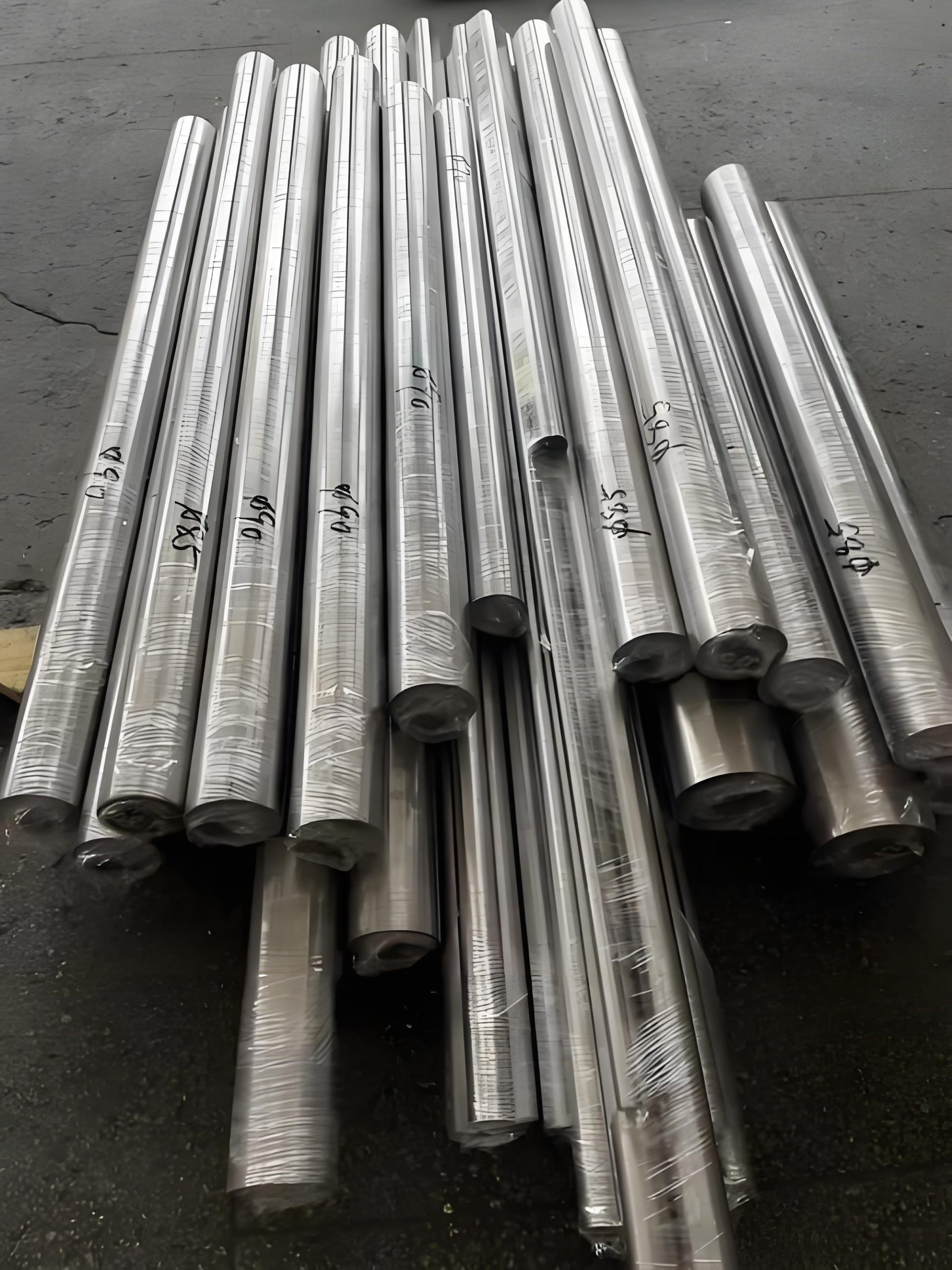
Round Bar Cast rod, machined bar and custom diameters Cast, PM/HIP or machined to drawing Valve trim, seats, pump shafts and wear sleeves View Round Bar
Sheet & Plate Custom cast or overlay plate dimensions Cast, clad, machined or project-specific Erosion shields, wear liners and corrosion-resistant surfaces View Sheet & Plate
Strip & Foil Custom strip and thin wear stock Overlay, machined or special fabricated condition Wear shims, seals and special corrosion-wear parts View Strip & Foil
Wire Custom welding-wire diameters and spools AMS 5819 or AWS-qualified wire GMAW, GTAW, laser cladding and repair overlays View Wire
Fasteners Custom studs, screws, pins and wear-resistant hardware Machined or hardfaced to drawing Valve assemblies, dies and high-wear mechanical joints View Fasteners
Fittings Custom elbows, adapters and wear fittings Cast, machined or hardfaced to project requirements Petrochemical, power-generation and slurry-service equipment View Fittings
Flanges Custom cast or machined flange components Cast, machined and inspected to drawing Valves, pumps and erosive or corrosive piping systems View Flanges
Forgings Dies, rings, blocks and custom hot-work components Forged, heat treated or hardfaced as specified Forging dies, hot-stamping dies and high-impact wear parts View Forgings
Welding Wire Diameter and packaging to AWS or AMS requirements GTAW, GMAW, PTA, laser-cladding or cored-wire supply Valve trim, pump parts, erosion repair and wear overlays View Welding Wire


Material Selection Guide

When to consider Cobalt STELLITE-21

This guide helps buyers connect service conditions with the typical advantage of Alloy 625. Final selection should consider medium concentration, temperature, pressure, fabrication, availability and budget.

Alloy / Material Selection Strength Typical Position Selection Note
STELLITE® 21 Low-carbon matrix, good impact tolerance, cavitation and corrosion resistance Valve trim, pump parts, forging dies and sliding wear surfaces Select when balanced wear, corrosion and toughness are required.
STELLITE® 6 Higher carbide content and stronger general abrasive-wear resistance Hardfacing, valve seats and general-purpose wear components Choose Stellite 6 for more severe abrasion; choose 21 for better toughness and cavitation resistance.
STELLITE® 6B Wrought structure with higher ductility and dimensional stability Machined bushings, sleeves, valve parts and sliding components Select 6B when a wrought product and certified tensile properties are important.
STELLITE® 6K Higher hardness and abrasive-wear performance Severe abrasive and erosive wear Compare impact loading, machining difficulty and corrosion requirements.
HAYNES® 188 Better oxidation resistance and high-temperature structural stability Combustion liners, transition ducts and hot-section structures Choose 188 when oxidation exposure and fabricability outweigh carbide wear hardness.
CoCrMo-F75 Cast cobalt-chromium-molybdenum alloy for implant applications Orthopedic and dental castings Select F75 for regulated medical castings rather than industrial hardfacing service.


Why Choose Us

Supply and quality support for Cobalt STELLITE-21

For ranking traffic, buyers need more than a data sheet. This section gives clear trust signals for procurement, engineering and quality teams.

STASTM / ASME / AMS / EN

Quotation can be matched to project standards and product form specifications.

MTEN10204 3.1 MTC

Heat number, chemistry, mechanical properties and inspection records can be supplied.

QCPMI & Inspection

PMI, UT, dimensional inspection, visual inspection and packing check are available.

CSCustom Size

Cutting, machining allowance, rough machining and drawing-based supply can be arranged.

EPExport Packing

Wooden case, bundle, waterproof protection and international shipping documents.

RFFast Technical Reply

Send grade, size, standard, quantity and destination for a practical quotation route.

FAQ

Cobalt STELLITE-21 questions from buyers

Find practical answers about procurement, standards, fabrication and industrial applications.

STELLITE 21 is used for valve trim, pump components, erosion-resistant parts, cavitation-resistant surfaces, forging and hot-stamping dies, petrochemical equipment, power-generation hardware, medical castings and qualified wear-hardfacing overlays.

The principal cast and rod designation is UNS R30021. Wire may be identified as UNS W73041 and coated electrodes as UNS W73021. The applicable AMS or AWS specification should always be included with the UNS designation.

STELLITE 21 has lower carbon and a lower carbide volume fraction than STELLITE 6. It generally offers better toughness, cavitation resistance, corrosion performance and impact tolerance, while STELLITE 6 normally provides stronger general abrasive-wear resistance.

Typical STELLITE 21 hardness is approximately 27-40 HRC, and a worn or machined surface may work harden to approximately 48 HRC. Actual hardness depends on casting, weld-deposition, dilution, heat treatment, carbide distribution and service history.

Yes. Optimum high-temperature strength may be developed by a qualified solution treatment around 1200-1240 °C followed by quenching and aging in an appropriate range. Heat treatment is not automatically interchangeable between castings, PM/HIP parts and weld deposits, so the component procedure must be qualified.

Yes. STELLITE 21 is available as TIG rod, GMAW wire, coated electrode, cored wire and powder for qualified hardfacing or additive processes. Oxy-acetylene deposition is generally not recommended for this alloy. Control dilution, heat input, interpass temperature and final inspection.

Common references include AMS 5385 for castings, AMS 5819 for rod and wire, AWS A5.21 or ASME SFA-5.21 ERCoCr-E for welding rod and wire, and AWS A5.13 or ASME SFA-5.13 ECoCr-E for coated electrodes. The exact current revision and product form should be verified before ordering.

Please send the grade or UNS number, casting or deposition process, product form, dimensions, quantity, applicable AMS or AWS standard, hardness target, wear mode, operating temperature, corrosion medium, substrate material, dilution limit, inspection plan and destination.

Request Cobalt STELLITE-21 Quote

Need Cobalt STELLITE-21 price, stock or technical support?

Send your required grade, product form, size, quantity, standard, certificate and destination. We will help check availability, production route, inspection scope and practical delivery plan.

Email RFQ

Home Tel Mail Inquiry